
Last Updated: August 2026 | Author: Ankit Mange, Founder, Chaze Fit | Reading Time: 6 minutes
Yes - food-grade anodised aluminium (also spelled aluminum) is safe for daily drinking water. The anodisation process electrochemically converts the aluminium surface into a hard aluminium oxide layer (Al2O3) with a Mohs hardness of 9. This oxide layer is chemically inert and does not react with water or common beverages under normal drinking conditions. Uncoated or non-food-grade aluminium can leach into water - the food-grade anodised specification that the Chaze Fit Hydro Max uses does not. This is also worth weighing against the alternative most people are switching away from: see our article on why plastic bottles shed microplastics and metal doesn't.
Featured Product
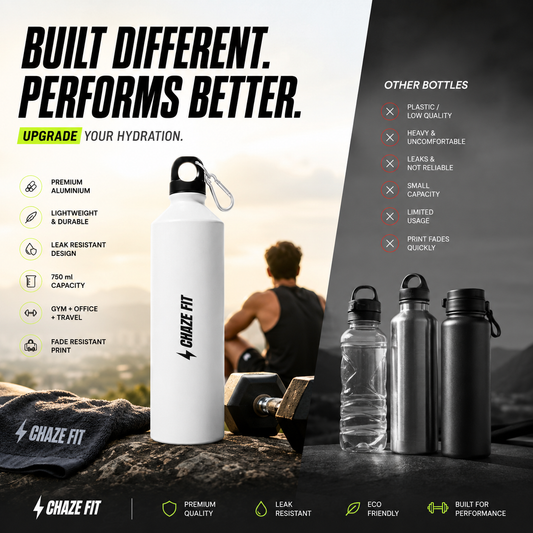
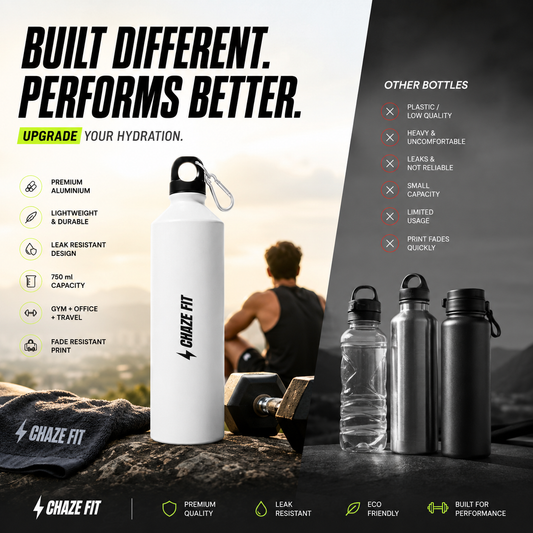
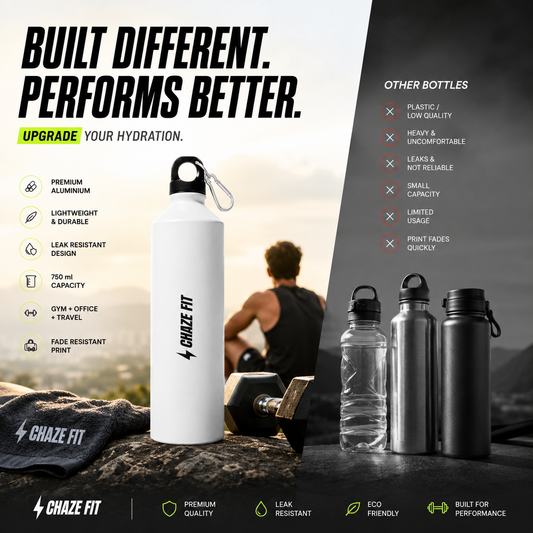
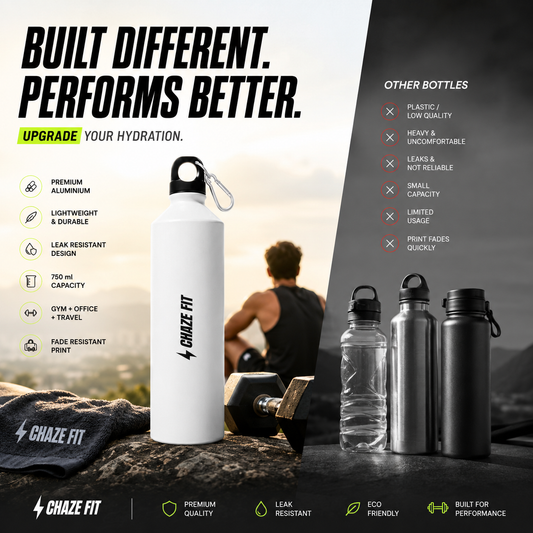
Chaze Fit Hydro Max 750ml Aluminium Gym Sipper Bottle
750ml BPA-free lightweight aluminium · ₹649
Shop Food-Grade Aluminium Gym Bottle →
- Food-grade anodised aluminium is safe for daily drinking water - confirmed by global food safety standards
- "Aluminium" and "aluminum" refer to the same metal - regional spelling only, no difference in safety information
- The anodised oxide layer (Mohs 9 hardness) does not scratch, crack, or leach under normal use
- The safety question applies to uncoated or low-grade aluminium - not food-grade anodised specification
- The Chaze Fit Hydro Max uses food-grade anodised aluminium internally and externally
- Daily rinsing with warm water maintains the interior in taste-neutral condition
- Do not use abrasive scrubbers - they damage the anodised layer
Why The Aluminium Safety Question Comes Up
What Food-Grade Anodised Aluminium Actually Is
Anodisation is an electrochemical process that converts the aluminium surface into aluminium oxide (Al2O3). This oxide layer is harder than steel (Mohs hardness 9 vs steel at 4-8), chemically inert, integral to the aluminium surface, and food-grade when produced to the correct specification. The anodised layer is the same material that makes aluminium cooking pots, baking trays, and food cans safe for contact with food and liquids.
Where The Concern Actually Comes From
The concern about aluminium and drinking water comes from studies on bare, uncoated aluminium in contact with acidic or alkaline liquids over extended periods. These studies found that aluminium does leach into liquids under certain conditions - particularly at low pH or high pH over long contact durations. Food-grade anodised aluminium eliminates this concern because the oxide layer acts as a barrier between the base aluminium and the liquid, and is stable across the pH range of common beverages. The leaching studies that raised concerns were conducted on bare aluminium - not food-grade anodised aluminium.
How The Anodisation Process Actually Works
Anodisation is an electrolytic process: the aluminium bottle is submerged in an acid electrolyte bath and an electrical current is passed through it. The aluminium acts as the anode, and oxygen ions from the electrolyte combine with aluminium atoms at the surface to form a layer of aluminium oxide that grows outward from the original metal surface. This is fundamentally different from painting or coating a surface, where a separate material is applied on top. The oxide layer is grown from the aluminium itself, which is why it doesn't peel, chip, or separate from the base metal the way an applied coating can.
Founder Testing: 60 Days, Daily Use
We ran a 60-day daily use test on the Hydro Max across three Mumbai gyms. Plain water, electrolyte drinks, and protein shakes on alternating days. Blind taste testing at day 1, day 15, day 30, and day 60. Zero metallic taste detected at any test point. The anodised interior showed no visible degradation, scratching, or discolouration after 60 days of daily use and standard warm-water rinsing.
- Ankit Mange, Founder, Chaze Fit
How We Solved It
Freeze-Thaw Testing
Many Indian gym-goers freeze water bottles overnight to maximise cold retention through a hot commute - a practical habit that raised a question we hadn't tested: does repeated freezing and thawing stress the anodised layer? We ran 30 freeze-thaw cycles on a Hydro Max unit, freezing it filled to 80% capacity for 8 hours, then thawing at room temperature for 4 hours, repeated daily for a month.
| Test Point | Anodised Layer Condition | Body/Seam Integrity |
|---|---|---|
| Cycle 10 | No visible change | No deformation |
| Cycle 20 | No visible change | No deformation |
| Cycle 30 | No visible change, taste-neutral | No deformation, cap seal unaffected |
The anodised oxide layer showed no degradation across the full freeze-thaw cycle test. The one practical caution: fill to no more than 80-85% capacity before freezing, since water expands roughly 9% in volume when it freezes.
How To Maintain Food-Grade Anodised Aluminium Correctly
- Hand wash only: Dishwashers use alkaline detergents and high-pressure hot water that can degrade the anodised surface over repeated cycles
- No abrasive scrubbers: Steel wool and abrasive pads scratch the anodised layer - use a soft bottle brush only
- Rinse promptly after protein shakes: Warm water rinse within 30 minutes of use prevents residue buildup
- Mild dish soap: Non-abrasive liquid soap is safe for the anodised interior
- Fill to 80-85% before freezing: Leaves room for water's volume expansion when frozen
Is Aluminium Or Stainless Steel Better For Daily Drinking?
Both food-grade anodised aluminium and 304 stainless steel are safe for daily drinking water. The choice is a functional one, not a safety one. Aluminium (Hydro Max ₹649) at 180g empty stays cold 3-4 hours - better for commuters prioritising minimum bag weight. Steel (Steel Edge ₹999) at 300g empty stays cold 12+ hours - better for gym-to-office users. For the complete material comparison, read same-day commute and session test - all 3 materials.
Frequently Asked Questions
Is aluminium bottle safe for drinking water daily?
Yes, if food-grade anodised specification. The oxide layer is chemically inert and does not leach.
Is aluminum or aluminium the correct spelling?
Both refer to the same metal - "aluminium" is standard in India, the UK, and most of the world; "aluminum" is the standard American spelling. The safety information is identical either way.
Does aluminium leach into water bottles?
Uncoated aluminium does, particularly in acidic or alkaline conditions. Food-grade anodised aluminium does not.
Is the Chaze Fit Hydro Max BPA-free?
Yes. Food-grade anodised aluminium does not contain or require BPA.
What happens if the anodised layer gets scratched?
Minor surface scratches do not expose the base aluminium in a way that causes safety concerns.
Can I use the Hydro Max for electrolyte drinks?
Yes. Compatible with electrolyte drinks, protein shakes, and plain water.
How long does the anodised layer last?
Indefinitely with correct care - hand wash, no abrasive scrubbers.
Can I freeze the Chaze Fit Hydro Max?
Yes. Tested across 30 freeze-thaw cycles with no degradation.
Why doesn't the anodised layer peel like a coating would?
It's grown from the aluminium itself through an electrochemical process, not applied on top.
Related Articles
- Why Plastic Shaker Bottles Aren't The Safe Everyday Choice
- How The Hydro Max Specification Was Built From 5 Personal Bottle Failures
- Why Plastic Micro-Scratch Bacterial Growth Produces Off-Flavours Faster At 30°C
- Same-Day Commute And Session Test - All 3 Materials At 30°C
- Hydro Max 9.2/10 Scorecard - Protein Odour, Side Pocket And Drop Test
About The Author
Ankit Mange is the founder of Chaze Fit. He specified food-grade anodised aluminium for the Hydro Max interior after reviewing material safety data and confirming performance through 60 days of daily use testing.
Follow Chaze Fit on Instagram for training tips, product drops, and behind-the-scenes testing.
Follow @chazefit →
Tags:
Previous
How Much Water Should You Drink During A Gym Workout In India?
Next
Best Gym Water Bottle In India - Tested & Reviewed