
Last Updated: July 2026 | Author: Ankit Mange, Founder, Chaze Fit | Reading Time: 6 minutes
During a gym workout in India, drink 500-750ml of water per hour of moderate-to-high intensity training. This is higher than typical international recommendations because Indian gym conditions - 28-36°C in non-AC and semi-AC facilities - increase sweat rate by 30-60% compared to a 22°C environment. A 750ml bottle is sized specifically to cover this requirement for a standard 60-minute session without a mid-session refill. For the full seasonal and city-level temperature data behind this range, see our Indian Gym Temperature & Humidity Reference.
Featured Product
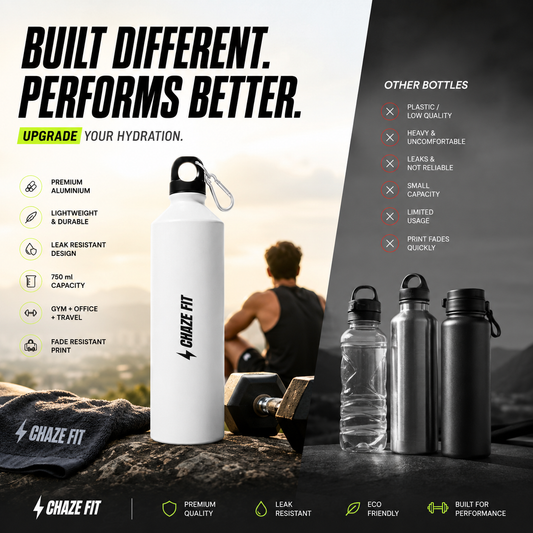
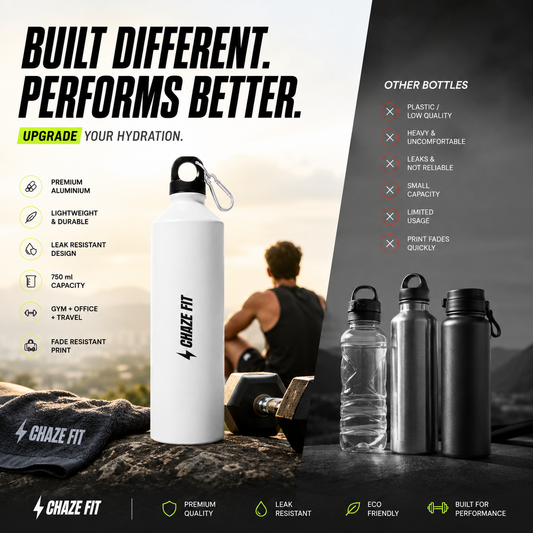
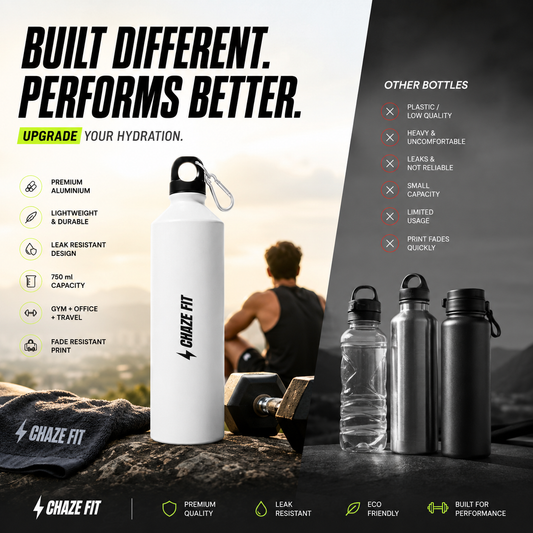
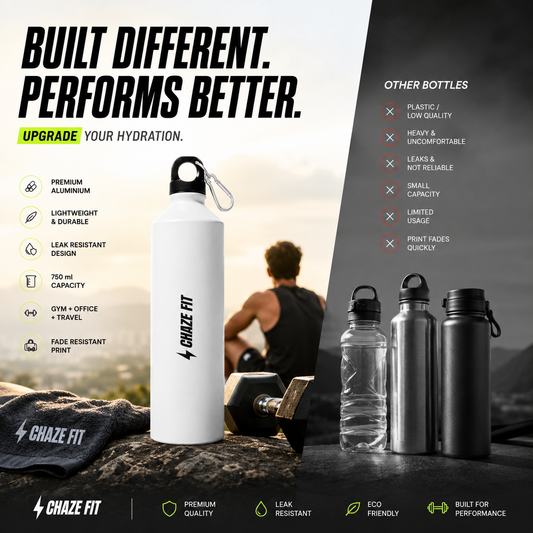
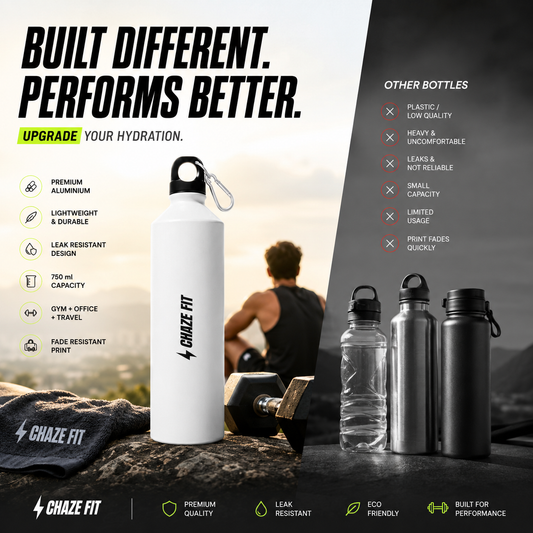
Chaze Fit Hydro Max 750ml Aluminium Gym Sipper Bottle
750ml BPA-free lightweight aluminium · ₹649
Shop 750ml Aluminium Sipper Bottle →- 500-750ml per hour of moderate-to-high intensity training in Indian gym conditions
- Non-AC gyms in India increase sweat rate by 30-60% versus 22°C climate-controlled environments
- Drink roughly 150-250ml every 15-20 minutes rather than large amounts infrequently
- Thirst is a delayed signal - by the time you feel thirsty, mild dehydration has likely begun
- For sessions over 90 minutes or in extreme heat, add electrolytes to plain water
- A 750ml bottle covers most standard sessions without requiring a refill
Why Hydration Needs Are Higher In Indian Gyms
The Temperature Factor
Most international hydration guidelines are based on 20-22°C climate-controlled gyms. At 30°C and above - the reality for most non-AC gym floors in Mumbai, Chennai, Hyderabad, and Delhi during 8-10 months of the year - the body sweats significantly more to maintain core temperature. Sweat rate increases approximately 10-15% for every 1°C rise in ambient temperature during exercise. Between 22°C and 30°C, the increase is 30-60%.
Not Everyone Sweats The Same
Ambient temperature explains most of the gap between international guidelines and Indian conditions, but individual sweat rate varies significantly between people even in identical conditions - by a factor of 2-3x in some cases, driven by body size, fitness level, heat acclimatisation, and genetics. Someone newly acclimatising to Indian heat will typically sweat more per session than someone who has trained consistently in the same conditions for months, as the body's sweat response becomes more efficient with repeated heat exposure. The 500-750ml/hour range in this guide is a starting point calibrated to Indian ambient conditions - individual adjustment within that range based on how soaked your clothing is at session end is reasonable and expected.
Founder Observation: Tracking Intake Across 90 Days
During the Hydro Max testing period, we tracked water intake across 90 training sessions in Mumbai. In the non-AC sessions, average intake was 680ml per hour. In the AC sessions, it was 420ml per hour - a 60% difference for the same workout structure and the same person. This is the clearest illustration of why generic hydration advice, written for AC gym contexts, understates what most Indian gym-goers actually need.
- Ankit Mange, Founder, Chaze Fit
How Much To Drink, And When
Timing Breakdown
Before training (15-30 min prior): 200-300ml, pre-hydrates without causing a full stomach during warm-up. During training (every 15-20 minutes): 150-250ml per interval, totalling 450-750ml for a 60-minute session. After training: replace any additional fluid lost - if your shirt is visibly soaked, an additional 250-500ml post-session is reasonable.
A 750ml bottle covers the during-training portion without a mid-session refill for most people. For the right bottle to carry this volume cold throughout an Indian session, read our Hydro Max 9.2/10 scorecard across 3 Mumbai gyms.
Why Thirst Is Not A Reliable Guide
Thirst is a delayed physiological signal. By the time the brain registers thirst, the body has typically already lost 1-2% of body weight in fluid - a level associated with measurable reductions in strength output and concentration during training. The practical solution is scheduled drinking - a sip every 15-20 minutes - rather than waiting for thirst.
When To Add Electrolytes
For sessions under 60 minutes at moderate intensity, plain water is sufficient. For sessions over 90 minutes, high-intensity training lasting 45+ minutes, or training in particularly hot conditions (35°C+), adding sodium, potassium, and magnesium helps replace what is lost through heavy sweating. Sodium concentration in sweat itself varies by individual - typically in the range of 400-1,800mg per litre of sweat depending on genetics, diet, and heat acclimatisation. Someone with a naturally higher sweat sodium concentration (sometimes noticeable as visible white residue on dried gym clothing) will benefit from electrolyte replacement at a lower training duration threshold.
Signs You Are Not Drinking Enough During Training
| Sign | What It Indicates |
|---|---|
| Headache developing mid-session | Common early sign of mild dehydration in warm gyms |
| Noticeable drop in strength on later sets | 1-2% body weight fluid loss measurably reduces strength output |
| Dark yellow urine post-session | Indicates inadequate hydration during and around training |
| Dizziness when standing up after a set | Dehydration combined with blood pressure changes from exercise |
| Excessive thirst immediately after training | Intake during the session did not match sweat rate |
| White residue on dried gym clothing | May indicate higher-than-average sweat sodium concentration - consider electrolytes sooner |
Why 750ml Is The Right Bottle Size
For a standard 60-minute Indian gym session at 28-36°C: target intake during the session is 500-750ml. 750ml covers the full session without refilling. 500ml requires either refilling or under-hydrating. Above 1 litre is unnecessary for 60 minutes and adds dead weight to the bag.
Frequently Asked Questions
How much water should I drink during a 1-hour gym session in India?
500-750ml for a 1-hour session of moderate-to-high intensity training in typical Indian gym conditions.
Is it bad to drink too much water during a workout?
Drinking excessively large volumes at once can cause stomach discomfort. Spread intake - 150-250ml every 15-20 minutes.
Should I drink water during weight training or only after?
During. Waiting until after training means you trained in a fluid deficit.
Do I need electrolytes for a normal gym session in India?
For sessions under 60 minutes, plain water is generally sufficient. For longer or more intense sessions, electrolytes help.
How do I know if I'm dehydrated during a workout?
Headache, drop in strength on later sets, dizziness when standing, and excessive thirst post-training.
Why do I sweat so much more in Indian gyms compared to gyms abroad?
Most gyms outside India operate at 20-22°C with full air conditioning; most Indian gyms operate at 28-36°C, causing a 30-60% increase in sweat rate.
Why does someone in my class sweat so much more than me during the same workout?
Individual sweat rate varies 2-3x between people based on body size, fitness level, and heat acclimatisation.
Related Articles
- 5 Bottle Failures That Defined The Hydro Max And Steel Edge
- Commute Weight, Cold Retention And Drop Resistance - All 3 Materials Compared
- Hydro Max Scored 9.2/10 - Cold Retention, Commute Fit And Odour Resistance
- What The Mohs 9 Anodised Oxide Layer Does To Aluminium Chemistry
- Indian Gym Temperature & Humidity Reference Data
About The Author
Ankit Mange is the founder of Chaze Fit and works closely on product development, material selection, and testing.
Follow Chaze Fit on Instagram for training tips, product drops, and behind-the-scenes testing.
Follow @chazefit →
Tags:
Previous
Aluminium vs Steel vs Plastic Water Bottle: Which Is Best For Indian Gyms?
Next
Is An Aluminium Bottle Safe For Daily Drinking Water?