
Last Updated: July 2026 | Author: Ankit Mange, Founder, Chaze Fit | Reading Time: 7 minutes
Gym bottles fail to keep water cold in Indian heat because they use single-wall construction with no insulation layer. In a 30-36°C non-AC gym, heat transfers rapidly from warm air through the bottle wall into the water. A plastic bottle reaches ambient temperature in 20-30 minutes. A single-wall aluminum bottle in 60-90 minutes. Only double-wall vacuum insulation - which removes air between the walls, eliminating convection heat transfer - keeps water meaningfully cold for 12+ hours in these conditions. For the full seasonal temperature and humidity data, see our Indian Gym Temperature & Humidity Reference.
Featured Product
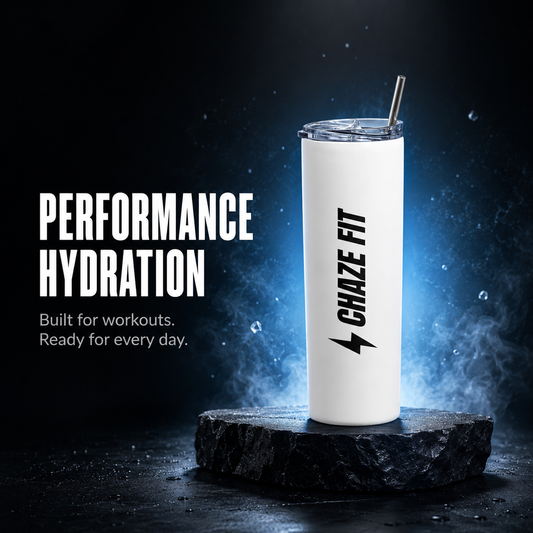
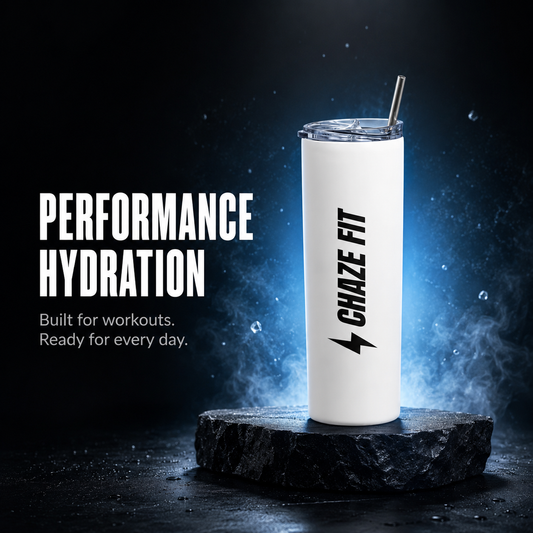
Chaze Fit Steel Edge 20oz Tumbler
20oz double-wall insulated · 12-hr ice cold · ₹999
Shop 304 Stainless Steel Gym Tumbler →- Single-wall bottles (plastic, aluminium, non-vacuum steel) provide no real insulation against 30-36°C Indian gym ambient heat
- At 30°C, plastic bottles reach ambient temperature within 20-30 minutes
- Double-wall vacuum insulation eliminates convection and drastically reduces conduction
- Most steel gym bottles sold in India are single-wall and perform no better than aluminium
- International bottle specifications are tested at 22°C - bottles rated 6 hours cold at 22°C may deliver only 2-3 hours at 34°C
Why Gym Bottles Go Warm So Fast In India
The Physics: Why Heat Transfers Into Your Bottle
Gym bottles go warm quickly in India because most bottles use single-wall construction with no insulation. In Indian non-AC gyms operating at 30-36°C, the temperature differential between cold water (4°C) and ambient air is 26-32°C - compared to 12-18°C in climate-controlled 22°C gyms. Three mechanisms drive this: convection (through fluids including air - warm gym air heats the bottle exterior), conduction (through solid materials - heat conducts from the warm outer surface through the bottle wall into the cold water), and radiation (through electromagnetic radiation, the residual mechanism even in a vacuum). In a single-wall bottle, all three mechanisms are active simultaneously. Full explanation: how convection, conduction and radiation behave differently in a vacuum-insulated wall.
Heat Transfer Rate Scales With Temperature Differential
The rate of heat transfer between two objects is roughly proportional to the temperature difference between them - a principle sometimes called Newton's Law of Cooling. A 30°C gym has roughly double the driving temperature differential of a 22°C gym relative to 4°C water, but because the heat transfer rate at any moment depends on the differential at that moment, and that differential barely changes for a well-insulated bottle while it changes rapidly for a poorly-insulated one, the practical gap in performance is much larger than the temperature ratio alone would suggest. This is the physics reason a bottle "rated for 6 hours" in an international lab context can underperform dramatically once actually used in Indian ambient conditions.
Founder Experience: The Bottle That Was Warm By The Second Set
I trained at a non-AC gym in Andheri, Mumbai for two years. March to October, floor temperature consistently 30-35°C. A standard plastic sports bottle was warm by the 20-minute mark. A steel bottle I bought at a sports store for ₹450 - single-wall, just labelled as steel - was warm by the 40-minute mark. Neither one kept water cold enough to make a difference in the second half of any session. The first time I used a double-wall vacuum tumbler, the difference was immediate.
- Ankit Mange, Founder, Chaze Fit
How We Solved It
Temperature Loss Tested: 4 Bottle Types At 30°C Ambient
| Bottle Type | Start | 30 min | 60 min | 90 min | 3 hours | 6 hours |
|---|---|---|---|---|---|---|
| Plastic sports bottle | 4°C | 18°C | 27°C | 30°C | 31°C | 32°C |
| Single-wall aluminium | 4°C | 12°C | 21°C | 27°C | 30°C | 31°C |
| Single-wall steel | 4°C | 10°C | 19°C | 25°C | 29°C | 31°C |
| Chaze Fit Steel Edge (double-wall vacuum) | 4°C | 5°C | 6°C | 8°C | 11°C | 13°C |
Peak Summer Stress Test: 38°C Ambient
All of the data above uses 30°C ambient as the standard Indian non-AC gym baseline. But Delhi, Nagpur, and inland cities regularly exceed 38-40°C during peak summer afternoons, and gym floors without AC track close to outdoor ambient. We re-ran the same comparison at 38°C.
| Bottle Type | 30 min (38°C) | 60 min (38°C) | 3 hours (38°C) |
|---|---|---|---|
| Plastic sports bottle | 26°C | 34°C | 37°C |
| Single-wall aluminium | 19°C | 28°C | 36°C |
| Chaze Fit Steel Edge (double-wall vacuum) | 6°C | 7°C | 13°C |
At 38°C, single-wall bottles collapse even faster than at 30°C. The Steel Edge's performance barely changes between the 30°C and 38°C tests, which is exactly what the physics predicts: once convection is eliminated by the vacuum gap, the bottle's cold retention becomes far less sensitive to how hot the ambient environment gets.
How Double-Wall Vacuum Insulation Solves The Problem
Double-wall vacuum insulation removes air from the space between the inner and outer walls. Without air, convection is eliminated. Conduction requires solid contact - the minimal connection points between walls provide very little pathway. Only radiation remains, which is why water temperature changes slowly rather than not at all. The outer wall stays at ambient temperature (no condensation) while the inner wall stays near the liquid temperature for 12+ hours.
The Chaze Fit Steel Edge is the product built to solve this specific Indian gym problem. For the full scorecard, read how the Steel Edge scored on 8 criteria including cold retention and lid seal.
Shop Chaze Fit Steel Edge Insulated Tumbler ₹999
Frequently Asked Questions
Why does my gym water bottle get warm so quickly in India?
Because most gym bottles use single-wall construction with no insulation, and Indian non-AC gyms run at 30-36°C.
Do steel gym bottles keep water cold in Indian heat?
Only if they are double-wall vacuum insulated. Single-wall steel performs only marginally better than plastic.
Why do imported gym bottles not work as well in India?
International bottle specifications are tested at 20-22°C. A bottle rated 6 hours cold at 22°C may deliver only 2-3 hours at 34°C.
What is the best gym bottle to keep water cold in Indian summer?
A 20oz double-wall vacuum-insulated stainless steel tumbler, keeping water below 15°C for 12+ hours at 30°C ambient.
Does the Chaze Fit Steel Edge get condensation outside?
No. The double-wall vacuum insulation keeps the outer wall at ambient temperature.
How much colder is a vacuum bottle vs a regular bottle in India?
At 60 minutes in a 30°C gym, a plastic bottle holds water at approximately 27°C versus 6°C for the Steel Edge.
Does the Steel Edge perform differently in extreme heat cities like Delhi or Nagpur?
Barely. At 38°C ambient, performance showed almost no change from 30°C testing.
Related Articles
- Steel Edge Specifications And 5 Key Findings From 60 Days Testing
- Temperature, Odour And 12-Month Cost - Steel Edge vs Plastic
- Steel Edge Scored On 8 Criteria - Cold Retention, Lid Seal, One-Handed Use
- Convection, Conduction And Radiation In A Vacuum-Insulated Bottle Wall
- Indian Gym Temperature & Humidity Reference Data
About The Author
Ankit Mange is the founder of Chaze Fit and trained for two years in a non-AC Mumbai gym before developing the Steel Edge Tumbler specification.
Follow Chaze Fit on Instagram for training tips, product drops, and behind-the-scenes testing.
Follow @chazefit →
Tags:
Previous
The Complete Guide To Insulated Tumbler Bottles In India
Next
Stainless Steel Tumbler vs Plastic Gym Bottle: Which Is Better For Indian Gyms?