

Last Updated: July 2026 | Author: Ankit Mange, Founder, Chaze Fit | Reading Time: 6 minutes
No - a racerback strap design does not by itself mean a sports bra offers more support. Racerback refers to the shape the straps form across the back (a Y or T shape rather than crossing straight down), which changes how strap pressure is distributed across the shoulders and how much shoulder-blade movement the bra allows. Support level - how much the bra reduces breast movement during activity - comes from a separate set of design choices: band tightness and construction, whether the cups compress or encapsulate, and overall fabric structure. A racerback bra can be low, medium, or high support depending on these other factors.
Quick Summary
- Racerback describes strap geometry - it affects shoulder comfort and range of motion, not motion control
- Support level comes from band construction, compression, and cup encapsulation - independent variables from strap style
- A racerback bra with a loose band and light compression is still low support, regardless of the strap design
- Most sports bra marketing across major brands presents racerback as if it implies a support category, without stating it explicitly
- Where racerback straps do have a genuine, separate advantage: range of motion. The Y/T shape stays closer to the shoulder's centre of rotation, resisting slip during overhead movement better than straight crossing straps
- To judge actual support, check the band tightness, compression level, and whether cups are encapsulated - not the strap style alone
Recommended Product
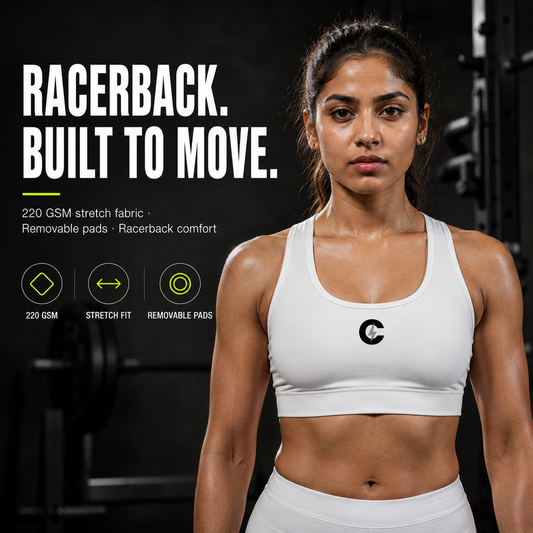
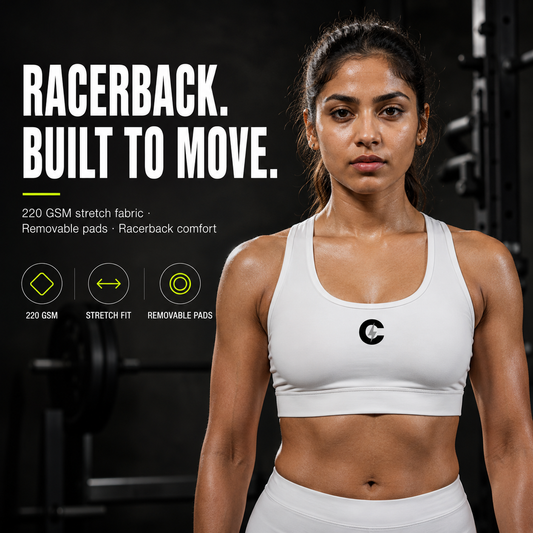
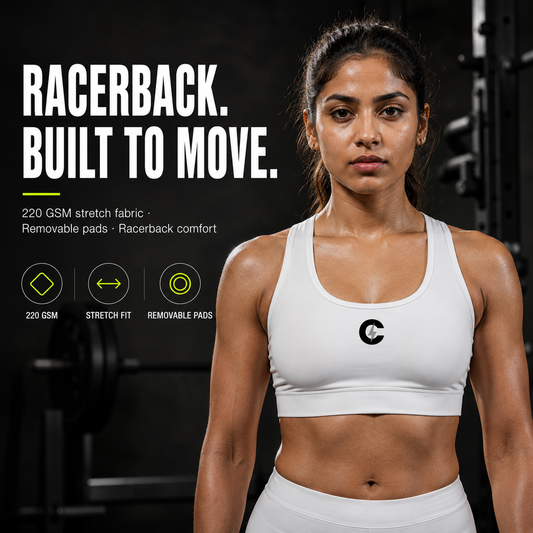
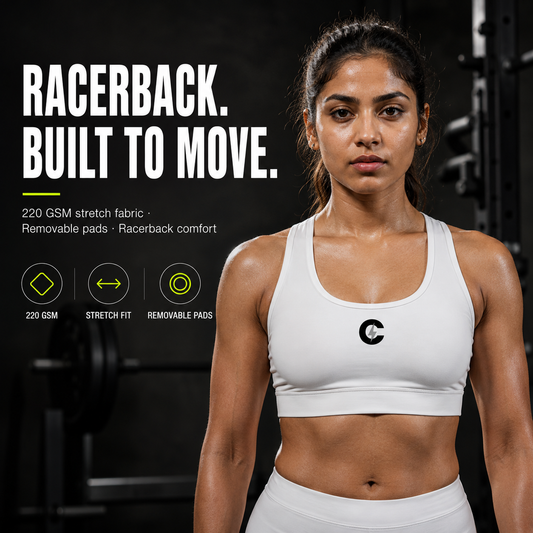
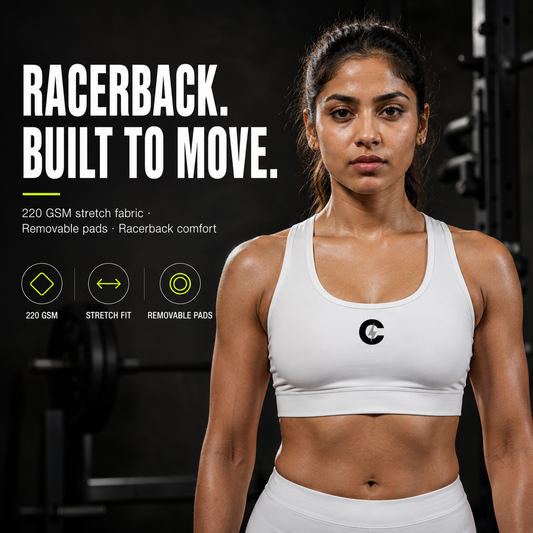
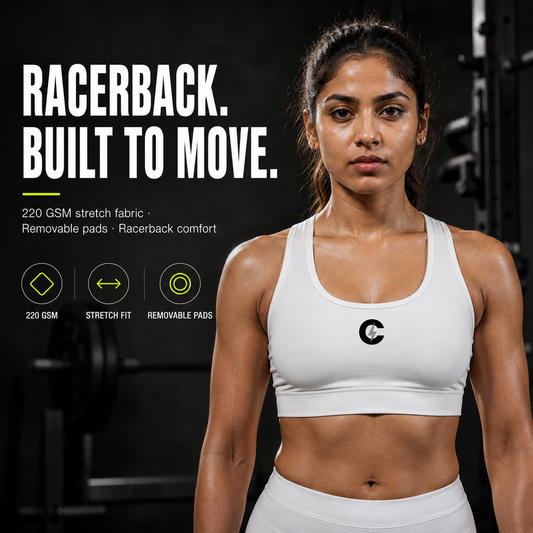
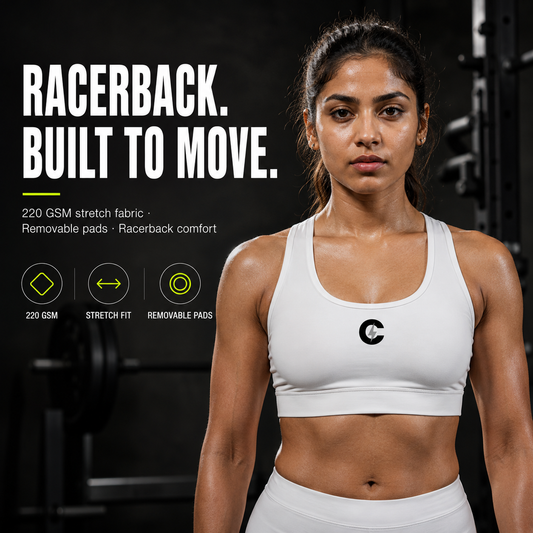
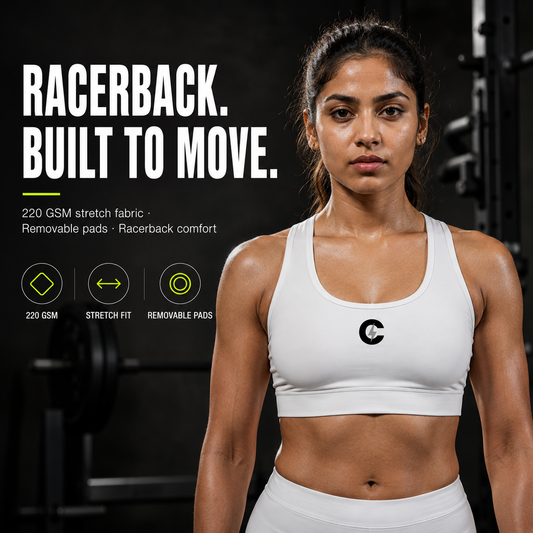
Chaze Fit Racerback Sports Bra
220 GSM poly-spandex · Removable pads · Mesh lining · ₹949
Shop Y-Strap Racerback Sports Bra →Why This Confusion Is So Common
Racerback bras are strongly associated with serious athletic wear - they show up disproportionately in high-support, high-impact product lines because the strap design happens to pair well with the kind of secure, structured fit those bras also need. That correlation is real, but it isn't causation. A racerback strap has been used across the full range of support categories, from light compression yoga bras to heavily structured running bras. The strap design became visually associated with "serious training" over time, and marketing language often leans on that association implicitly - describing a bra as "racerback" alongside words like "support," "secure," and "locked in" without ever stating a specific support level or activity recommendation.
Racerback vs Strappy: The Real Difference Is Range Of Motion, Not Support
Where racerback straps genuinely do outperform straight, crossing straps is in shoulder mobility and slip resistance during overhead movement - a real, separate benefit from support level. A standard straight-strap bra crosses over the shoulders roughly parallel to each other; during an overhead reach, this geometry tends to let straps drift outward toward the edge of the shoulder, since the shoulder blades rotate and separate slightly during the movement. A racerback's Y or T shape converges the straps closer to the spine and the shoulder's centre of rotation, so they track with that rotation instead of sliding off it. The practical result: fewer strap adjustments during pull-ups, overhead presses, and reaching movements - a comfort and convenience benefit, independent of whether the bra underneath is low, medium, or high support.
What Actually Determines Support Level
1. Band Tightness And Construction
The underband - the horizontal band sitting just below the bust - does the majority of the structural work in a sports bra, more than the straps do. A snug, well-constructed band prevents the bra from shifting or riding up during movement, which is foundational to support regardless of strap style.
2. Compression vs Encapsulation
Compression bras press breast tissue against the chest as a single mass, which works reasonably well for smaller busts and lower-impact activity. Encapsulation bras have individually shaped cups that support and separate, generally providing more structured support, particularly for larger busts or higher-impact movement. Many bras use a hybrid of both. Neither approach is tied to a specific strap style.
3. Fabric Structure And Weight
Heavier, more structured fabric (often reinforced with additional support panels) restricts movement more effectively than a lighter, more flexible fabric - independent of whether the straps are racerback, crossback, or standard.
Founder Note: Why We Don't Call Our Racerback Bra "High Support"
It would have been an easy, low-risk marketing choice to lean into the "racerback equals serious support" association that already exists in most people's minds. We didn't, because our own testing told us clearly that this specific construction - 220 GSM poly-spandex, compression-plus-light-encapsulation, removable pads - is correctly positioned for yoga, walking, and light training, not running or HIIT. Several testers who tried it specifically for running reported it wasn't sufficient. Calling it "high support" because of the strap design would have been technically defensible in the sense that nobody would have caught the specific claim, but it wouldn't have been honest about what the product actually does. What we can say honestly is that the racerback shape did earn its place on comfort and range-of-motion grounds - testers consistently reported fewer strap adjustments during overhead work compared to a straight-strap comparison bra, which is a real, separate benefit from support level.
- Ankit Mange, Founder, Chaze Fit
How To Actually Judge Support Level When Buying
- Check for a stated support category: Low, medium, or high support - or a suggested activity list. If a listing doesn't state this, it likely hasn't been tested for it specifically.
- Check the band construction: A wider, more structured underband generally signals a higher support build.
- Check whether cups are encapsulated: Individually shaped cups (visible as separate panels, sometimes with molded padding) tend to indicate more structured support than a single compression panel.
- Don't rely on strap style alone: Racerback, crossback, and standard straps all exist across every support category.
The Chaze Fit Racerback Sports Bra
The Chaze Fit Racerback Sports Bra (₹949) is a compression-plus-light-encapsulation build at 220 GSM poly-spandex, positioned honestly for low-to-medium intensity activity - yoga, walking, light gym training, athleisure. For the complete specification guide, read our article on the complete guide to sports bras for Indian gym-goers.
Related Articles
- The Complete Guide To Sports Bras For Indian Gym-Goers
- What Support Level Sports Bra Do You Actually Need?
- Why Does My Sports Bra Band Ride Up During Workouts?
Frequently Asked Questions
Q1: Does racerback mean high support in a sports bra?
No. Racerback describes strap shape, not support level. Support comes from band construction, compression, and cup design, all of which vary independently of strap style.
Q2: Do racerback bras give more support than strappy bras?
Not inherently for motion control - support level depends on band and cup construction, not strap shape. Where racerback straps do have a real, separate advantage is range of motion and comfort: the Y or T shape keeps straps closer to the shoulder's centre of rotation, so they're less likely to slip during overhead movement than straight, crossing straps.
Q3: How do I know how much support a sports bra actually provides?
Check for a stated support category (low, medium, high) or activity recommendation from the brand, the band construction and width, and whether the cups are encapsulated or compression-only. Strap style alone doesn't tell you.
Q4: Can I wear a racerback sports bra for running?
Only if the specific bra is built and rated for high support. Racerback straps exist across all support categories - check the stated support level, not just the strap design.
Q5: Is the Chaze Fit Racerback Sports Bra high support?
No. It's honestly positioned as low-to-medium support, correct for yoga, walking, light gym training, and athleisure - not running or HIIT.
Follow Chaze Fit on Instagram for training tips, product drops, and behind-the-scenes testing.
Follow @chazefit →About The Author
Ankit Mange is the founder of Chaze Fit. He led the support-level testing across activity types described in this article before confirming the honest positioning of the Racerback Sports Bra.
Tags:
Previous
The Complete Guide To Sports Bras For Indian Gym-Goers
Next
Why Does My Sports Bra Band Ride Up During Workouts?
Related articles
-
Aug 07 2026
Buy AOP Racerback Sports Bra Online: Price & Sizes
-
Jul 19 2026