
Encapsulation vs Compression For Large Busts: What Actually Matters For Running

Last Updated: August 2026 | Author: Ankit Mange, Founder, Chaze Fit | Reading Time: 6 minutes
For running specifically, encapsulation or an encapsulation-plus-compression hybrid generally outperforms compression-only construction for larger busts, because encapsulation supports each breast individually in its own moulded cup rather than pressing all the tissue against the chest wall as one mass. This matters more as bust size increases, since compression-only bras have to work harder to control independent movement at higher volumes. For tubular breast shapes specifically - narrower at the base with less lower-pole fullness - moulded or contoured encapsulation cups also tend to fit more evenly than compression fabric, which is built assuming a fuller, more evenly distributed shape.
An Honest Note Before You Read Further
We want to be direct about something: Chaze Fit currently sells one sports bra construction - the AOP Racerback Sports Bra, a compression-plus-light-encapsulation hybrid built for low-to-medium impact use (yoga, walking, weight training). It is not built or tested as a dedicated high-impact running bra, and we haven't built separate constructions for different bust sizes or breast shapes yet. Writing this article as if we have the perfect answer for every body type would be dishonest. What we can do is explain the general fabric-construction science accurately, so you know what to look for - whether that search ends with a Chaze Fit product or not.
Compression vs Encapsulation: The Actual Mechanical Difference
A compression bra works by pressing breast tissue against the chest wall as a single mass, using a tight-fitting, stretchy fabric with no internal cup structure. This is simple, comfortable for many people, and works well at low-to-moderate bust sizes and lower-impact activities. An encapsulation bra uses individually moulded or seamed cups that support and separate each breast, similar to how a regular bra fits, but built from performance fabric.
At larger bust sizes, or during higher-impact movement like running, breast tissue moves in a figure-eight pattern that a single compressive layer struggles to control as precisely as two independently structured cups can. This is the core reason most running-bra brands that specialise in larger cup sizes (typically D+ and above) lean toward encapsulation or hybrid construction rather than compression alone. For the general construction breakdown, see our encapsulation vs compression sports bra guide.
Why Breast Shape Also Matters, Not Just Size
Bust size and breast shape are two different variables, and fit guidance often collapses them into one. A tubular breast shape - narrower at the base, with less fullness at the lower pole and sometimes more prominent projection - can fit unevenly in a compression bra, since compression fabric is engineered assuming a more evenly distributed, fuller shape across the whole cup area. A moulded or contoured encapsulation cup, by contrast, is built with more defined structure that can accommodate a narrower base and different fullness distribution more predictably.
This is genuinely a fit-engineering problem, not just a sizing problem - it's why some people find that going up or down a size within the same construction doesn't solve the discomfort, because the issue is the construction type, not the number on the tag.
What This Means If You're Shopping Right Now
- For running or other high-impact activity at a larger bust size: Prioritise encapsulation or hybrid construction over compression-only, and look specifically for brands that state cup sizing (not just band size) rather than one-size-stretches-to-fit compression bras.
- For a tubular or narrower-base shape: Look for moulded or contoured cups rather than flat compression panels, and check whether the brand offers fit guidance by shape, not just size.
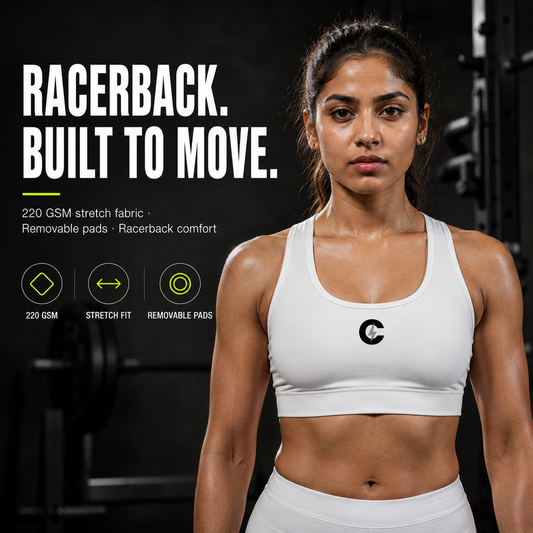
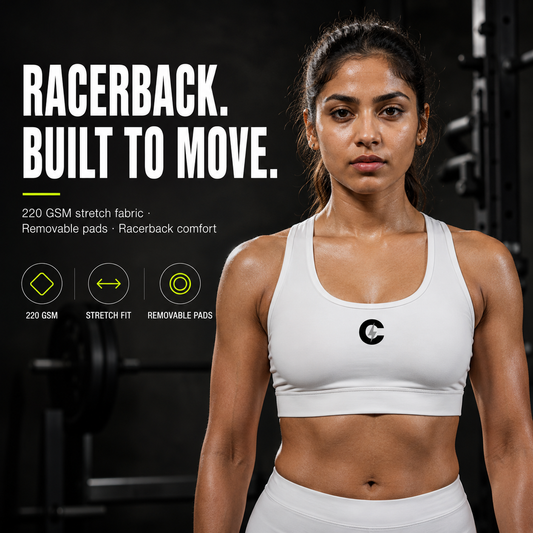
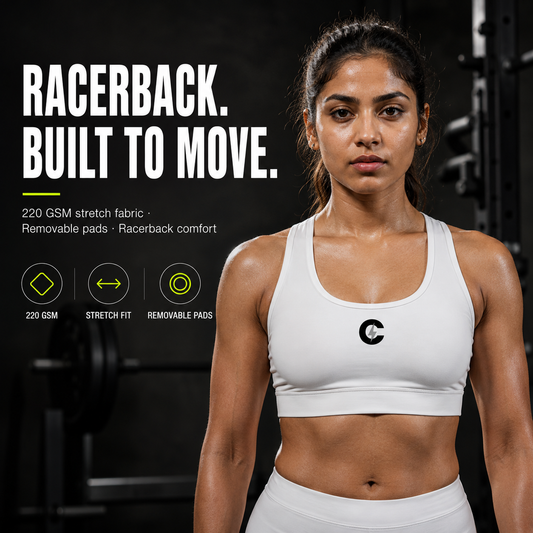
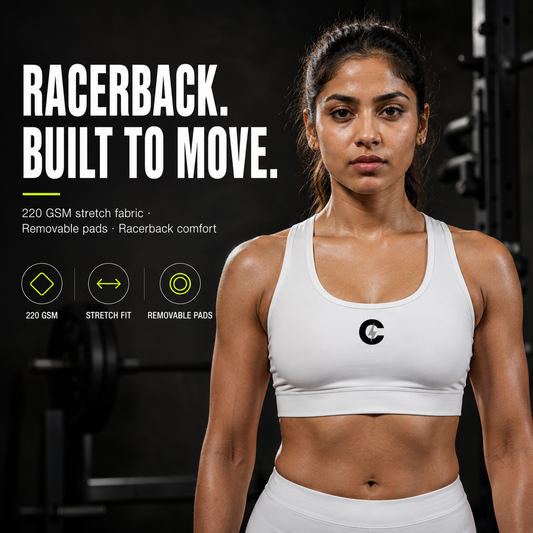
- For lower-impact activity (yoga, walking, weight training) at any bust size: A compression-led hybrid such as the Chaze Fit Racerback Sports Bra is a reasonable fit - see our support level guide to confirm your activity matches this construction before buying.
Where Chaze Fit Fits Into This - And Where It Doesn't
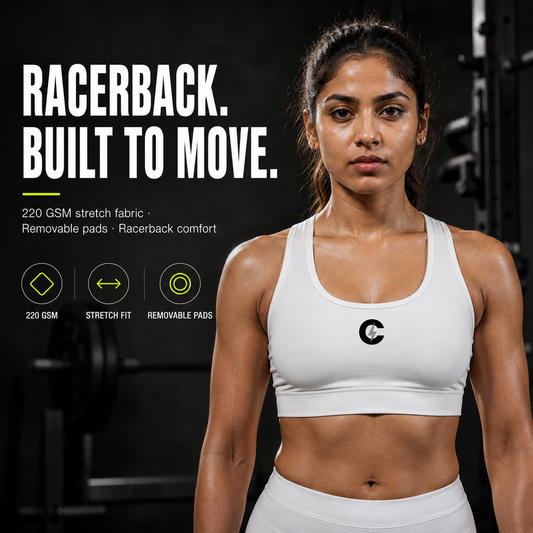
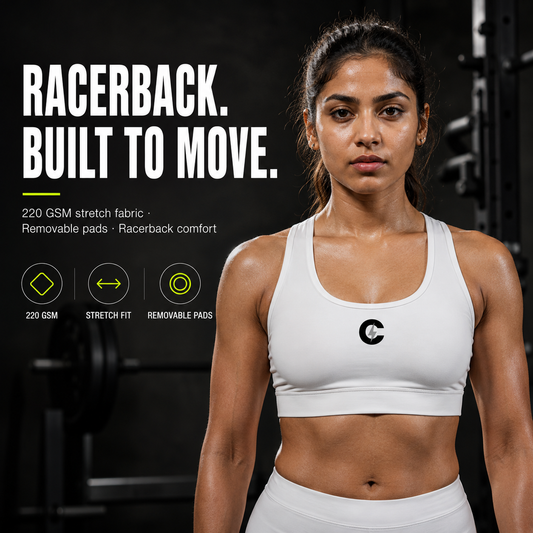
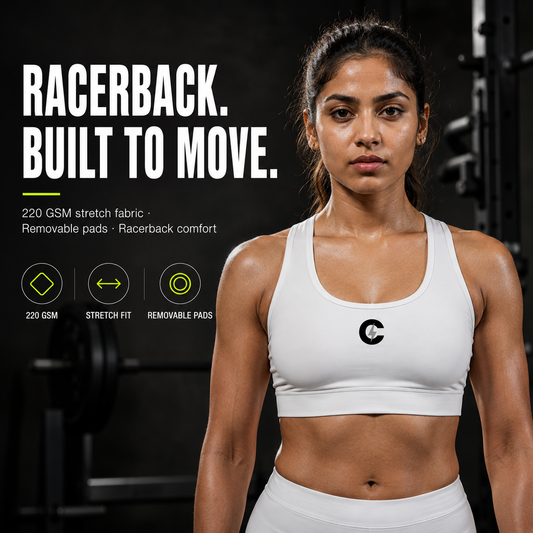
The Chaze Fit AOP Racerback Sports Bra uses a 220 GSM poly-spandex compression-plus-light-encapsulation hybrid, which sits closer to the compression end of the spectrum described above. It's a genuinely good fit for yoga, walking, weight training, and general athleisure - not for high-impact running, and not specifically engineered around larger bust sizes or particular breast shapes. If that's your situation, we'd rather point you toward what to look for generally than sell you a product that isn't the right match. If your training is lower-impact, our sizing guide will help you confirm whether the fit works for you.
Related Articles
- The Complete Guide To Sports Bras For Indian Gym-Goers
- Encapsulation vs Compression Sports Bra: What's The Difference?
- What Support Level Sports Bra Do You Actually Need?
- Sports Bra Sizing Guide - Band And Cup
- Why Does My Sports Bra Band Ride Up During Workouts?
Frequently Asked Questions
Q1: Should large-chested women get an encapsulation or compression sports bra for running?
For running specifically, encapsulation or encapsulation-plus-compression hybrid construction generally provides better individual support and reduces independent bounce more than compression-only construction, which is why most dedicated running-bra brands for larger busts use some form of encapsulation. Compression-only bras press breast tissue against the chest wall as one mass, which can feel restrictive at larger sizes and doesn't control side-to-side movement as precisely as encapsulation's individual cups.
Q2: What sports bra works best for a tubular breast shape?
Tubular breast shape - narrower at the base with less lower-pole fullness - generally benefits from encapsulation bras with moulded or contoured cups that provide structure rather than relying on compression alone, since compression bras are built assuming a fuller, more evenly distributed shape and can fit unevenly on a tubular shape.
Q3: Does Chaze Fit make a sports bra specifically for large busts or tubular shapes?
Not currently. Chaze Fit's Racerback Sports Bra is one construction - a compression-plus-light-encapsulation hybrid - built primarily for low-to-medium impact activities like yoga, walking, and weight training. It is not marketed or tested as a dedicated high-impact running bra for larger busts or specific breast shapes, and we'd rather say that directly than oversell a single-SKU product into a category it wasn't built for.
About The Author
Ankit Mange is the founder of Chaze Fit.
Follow Chaze Fit on Instagram for training tips, product drops, and behind-the-scenes testing.
Follow @chazefit →
Tags:
Previous
Buy AOP Racerback Sports Bra Online: Price & Sizes
Next
Why Does Skin Under Your Sports Bra Get Irritated Or Rashy? (And What Actually Helps)
Related articles
-
Aug 07 2026
Buy AOP Racerback Sports Bra Online: Price & Sizes
-
Jul 19 2026