304 vs 201 Stainless Steel - Why The Grade Matters For Your Gym Bottle

Last Updated: August 2026 | Author: Ankit Mange, Founder, Chaze Fit | Reading Time: 6 minutes
304 stainless steel contains roughly 18% chromium and 8% nickel, giving it strong corrosion resistance and near-total non-reactivity with acidic beverages - the food-service standard used in commercial kitchens and premium cookware. You may also see it labelled "SUS 304" on some bottles - SUS is simply the Japanese Industrial Standard (JIS) prefix for stainless steel (Steel Use Stainless), and SUS 304 refers to the identical alloy as "304 stainless steel" or "18/8 steel" under other regional naming conventions. 201 stainless steel substitutes some of that nickel with manganese to cut cost, which reduces corrosion resistance and can allow rusting at seams and welds over time, along with a higher chance of reacting with acidic drinks like citrus-based electrolyte mixes. Both grades look and feel identical on a shop shelf - the difference only shows up after months of real use.
Quick Summary
- 304 stainless steel (18/8 - 18% chromium, 8% nickel) is the food-service standard, fully corrosion-resistant and non-reactive with acidic drinks
- "SUS 304" is the same alloy as 304 stainless steel - SUS is the Japanese Industrial Standard naming prefix, not a different grade
- 201 stainless steel substitutes manganese for some nickel content, reducing cost but also reducing corrosion resistance
- 201-grade bottles can develop rust at seams and welds over months of daily use, particularly with acidic beverages
- Most product listings simply say "stainless steel" without specifying grade - this omission is itself a signal worth noting
- 304 steel is safe for protein shakes, citrus-based ORS, and other acidic drinks without flavour contamination risk
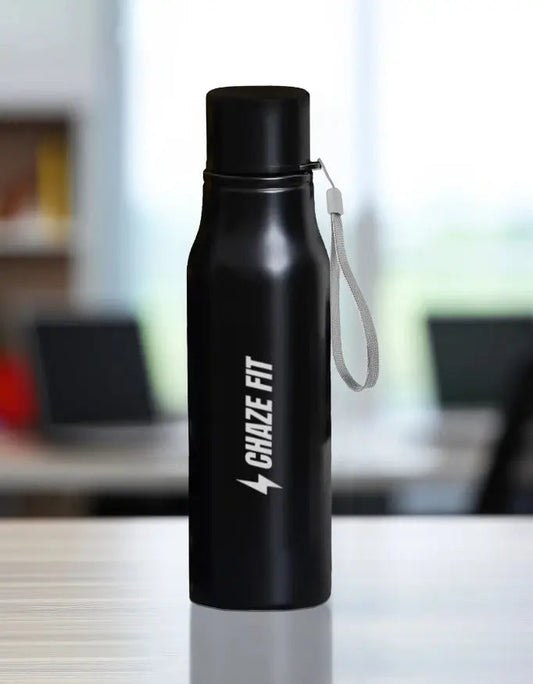
- The Chaze Fit Stainless Steel Water Bottle uses 304 steel throughout - interior, exterior, and lid components
Recommended Product
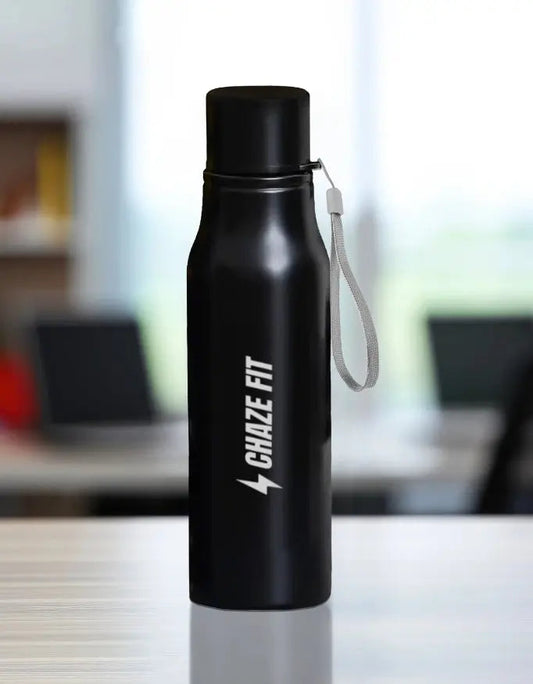
Chaze Fit Stainless Steel Water Bottle
304 steel · Laser engraved · 12hr cold retention · ₹749
Shop Food-Grade 304 Steel Bottle →Why "Stainless Steel" Alone Doesn't Tell You Enough
Stainless steel is a family of alloys, not a single specific material. The defining feature - chromium content - creates a thin, self-repairing oxide layer on the surface that resists rust. But how much chromium, and what other elements are blended in, varies significantly by grade, and those differences directly determine how well a bottle holds up over years of gym use, car storage, and contact with acidic drinks.
Why You'll See Different Names For The Same Grade
Steel grade naming varies by which standard a manufacturer or region uses. "304 stainless steel" and "18/8 steel" (referring to the 18% chromium / 8% nickel composition) are the most common names in Indian and Western retail listings. "SUS 304" is the same alloy under Japan's JIS (Japanese Industrial Standards) naming convention - SUS simply stands for Steel Use Stainless. If you see any of these three labels, they describe the same underlying material, not three different grades.
304 vs 201: The Actual Composition Difference
| Property | 304 Stainless Steel (SUS 304 / 18/8) | 201 Stainless Steel |
|---|---|---|
| Chromium content | ~18% | ~16-17% |
| Nickel content | ~8% | ~1-4% (substituted with manganese) |
| Corrosion resistance | High - resists rust at seams and welds long-term | Lower - more prone to rust at stress points over time |
| Reactivity with acidic drinks | Minimal - safe for citrus, electrolyte mixes, protein shakes | Higher risk of reaction and metallic taste over repeated exposure |
| Typical use case | Food-service equipment, commercial kitchens, premium cookware | Budget consumer goods, decorative items, lower-cost cookware |
| Cost | Higher | Lower |
Founder Note: Why This Distinction Is Easy To Miss As A Buyer
Before I started sourcing bottles for Chaze Fit, I didn't know 201 steel existed as a common substitute grade - I assumed "stainless steel" meant one consistent material. Most listings don't specify grade at all, which in practice usually means the cheaper option, since a manufacturer using 304 typically states it explicitly as a selling point. Once I understood the distinction, checking for a stated grade became one of the first things I look at on any steel product, not just bottles.
- Ankit Mange, Founder, Chaze Fit
Why This Matters Specifically For A Gym Bottle
- Daily acidic exposure: Protein shakes, citrus-flavoured electrolyte drinks, and vitamin C-fortified ORS are all mildly acidic and are exactly the kind of daily-use beverages a gym bottle handles repeatedly.
- Seam and weld stress: A double-wall insulated bottle has a welded seam at the base connecting inner and outer walls - a point where lower-grade steel is more prone to corrosion over time.
- Long-term daily use: A gym bottle is typically used and washed daily for years, unlike an occasional-use item where grade differences might never become apparent.
How To Check Steel Grade Before Buying
- Look for an explicit grade statement: "304 stainless steel," "18/8 steel," or "SUS 304" stated directly, not just "stainless steel."
- Be cautious of unusually low prices: A steel bottle priced well below comparable 304 products may be using a lower grade to cut cost.
- Check for magnetic response as a rough indicator: 304 steel is generally weakly or non-magnetic, while 201 steel tends to be more magnetic due to its different composition - not a definitive test, but a useful quick check.
The Chaze Fit Solution
The Chaze Fit Stainless Steel Water Bottle (₹749) uses 304 stainless steel (SUS 304) throughout - interior, exterior, and lid components - stated explicitly rather than left as an assumption. For the full specification checklist behind this bottle, read our article on the full specification checklist for engraved gym bottles.
Related Articles
- The Complete Guide To Engraved Steel Water Bottles
- Best Water Bottle To Leave In Your Car During Indian Summer
- How To Care For A Double-Wall Insulated Steel Bottle
- BIS Certification For Water Bottles Explained
Frequently Asked Questions
Q1: What is the difference between 304 and 201 stainless steel?
304 steel contains more nickel (~8%) and is highly corrosion-resistant and non-reactive with acidic drinks. 201 steel substitutes manganese for most of that nickel, reducing cost but also reducing corrosion resistance, with a higher risk of rusting at seams over time.
Q2: What does SUS 304 mean on a water bottle?
SUS 304 is the same material as 304 stainless steel - SUS is the Japanese Industrial Standard (JIS) prefix for stainless steel. You may see a bottle labelled "304 stainless steel," "18/8 steel," or "SUS 304" - all three describe the identical alloy.
Q3: How do I know if my steel bottle is 304 or 201 grade?
Check the listing for an explicit grade statement. If it just says "stainless steel" with no grade specified, it's worth asking the seller directly or treating it as a likely lower grade.
Q4: Can 201 stainless steel rust?
Yes, more readily than 304 steel, particularly at seams and welds and with repeated exposure to acidic liquids or high humidity.
Q5: Is it safe to drink protein shakes from a 201 steel bottle?
It carries more risk of reaction and metallic taste over time compared to 304 steel, particularly with vitamin C-fortified or acidic-flavoured shakes. 304 steel is the safer choice for this use case.
Q6: Does the Chaze Fit bottle use 304 or 201 steel?
304 steel (SUS 304) throughout - interior, exterior, and lid components - stated explicitly as part of the product specification.
Follow Chaze Fit on Instagram for training tips, product drops, and behind-the-scenes testing.
Follow @chazefit →About The Author
Ankit Mange is the founder of Chaze Fit. Steel grade sourcing and verification, described in this article, is a standard part of the specification process for every Chaze Fit steel product.
Tags:
Previous
Why Doesn't Laser Engraving Fade Like Printed Bottle Logos?
Next
Best Water Bottle To Leave In Your Car During Indian Summer
Related articles
-
Jul 19 2026
How To Care For A Double-Wall Insulated Steel Bottle
-
Jul 19 2026