
Last Updated: July 2026 | Author: Ankit Mange, Founder, Chaze Fit | Reading Time: 6 minutes
Laser engraving doesn't fade because it isn't a layer sitting on top of the steel - it's a permanent recess vaporised directly into the metal itself. A high-intensity laser beam removes a thin layer of steel (typically 0.2-0.3mm deep) to create the mark. Because there's no separate ink, paint, or coating that can wear away, there's nothing to peel, chip, or fade. Printed logos and light surface etching, by contrast, either sit on top of the steel or barely break its surface - both are vulnerable to the handling, bag friction, and repeated washing a gym bottle goes through daily.
Quick Summary
- Laser engraving vaporises steel to create a permanent recess - the mark is part of the metal, not a layer on top of it
- Printed logos use ink or coating applied to the surface, which wears away with handling and washing
- Light surface etching goes slightly deeper than printing but is still shallow enough to fade in contrast over time
- In our testing, laser engraving showed no visible change after 700+ simulated wash-and-handling cycles
- Printed and lightly etched logos showed significant wear within 6 months of daily gym use in our comparison
- Engraving depth on the Chaze Fit steel bottle is 0.3mm, applied to the outer wall only
Recommended Product
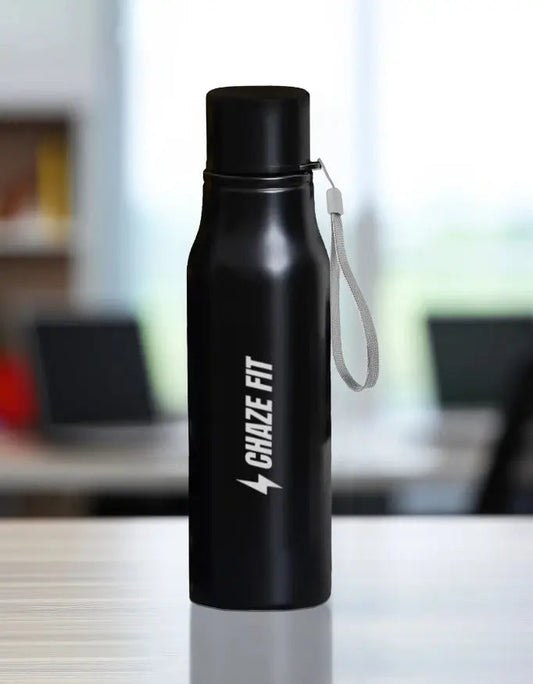
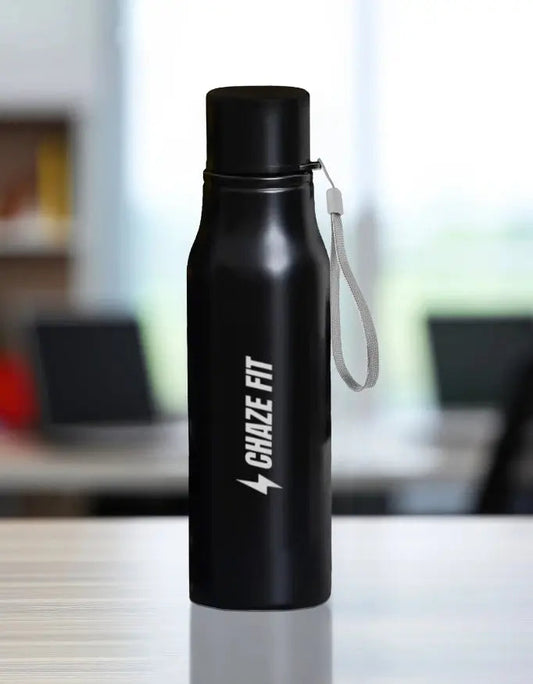
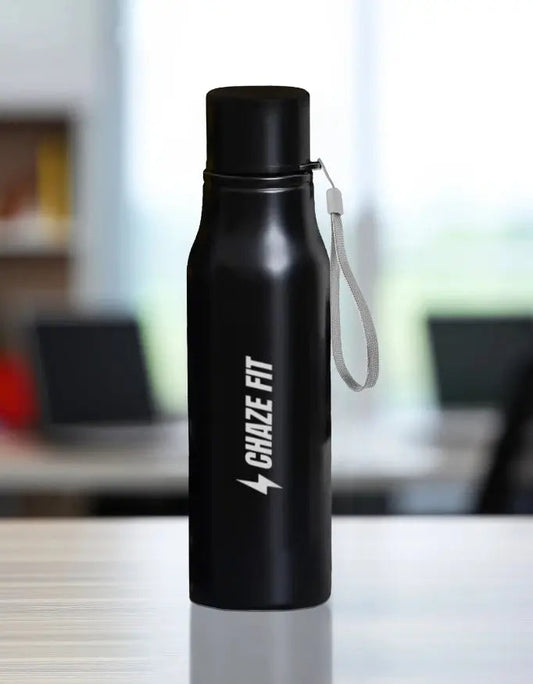
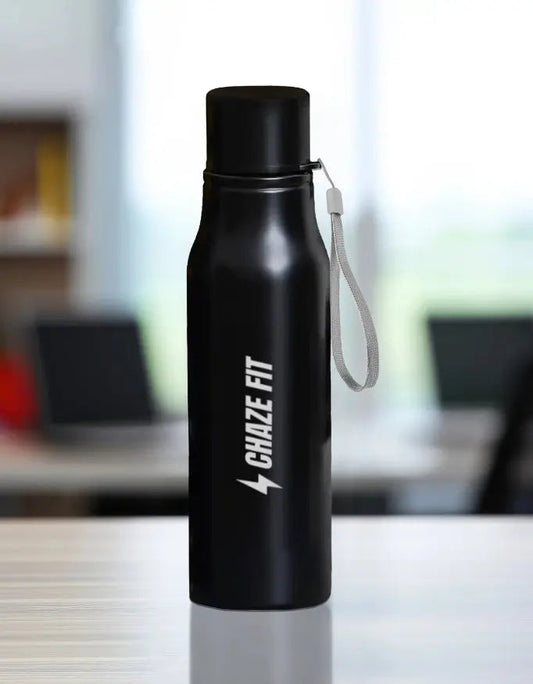
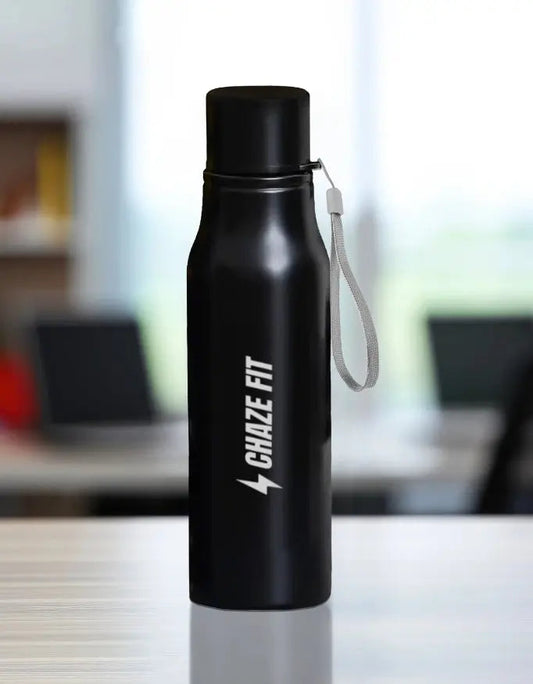
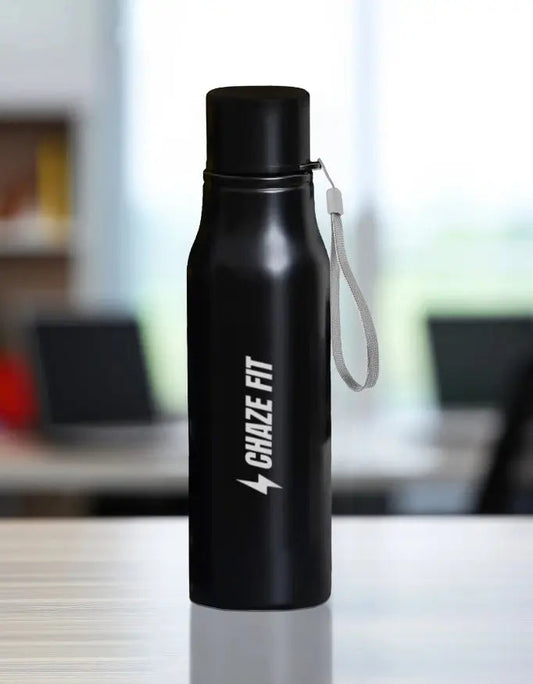
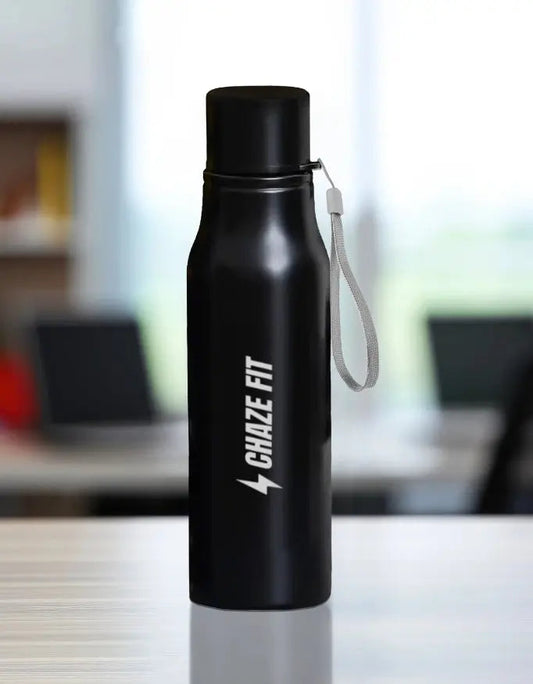
Chaze Fit Stainless Steel Water Bottle
304 steel · Laser engraved · 12hr cold retention · ₹749
Shop 304 Steel Bottle With Permanent Engraving →The Three Common Methods, And What Each One Actually Does
Printed Logos
A printed logo applies ink or a coated design directly onto the finished steel surface, typically via pad printing or screen printing. This is the cheapest and fastest method, which is why it's common on budget bottles. Because the mark is a separate material sitting on top of the steel, it has no mechanical bond to resist abrasion - repeated contact with a gym bag, a car cup holder, or hands during a workout gradually wears the ink away.
Light Surface Etching
Etching uses acid or a lower-intensity laser pass to lightly mark the surface, typically to a depth under 0.1mm. This creates a shallower mark than deep laser engraving - still recognisable initially, but shallow enough that grime and oxidation fill in the recess over time, reducing visible contrast even if the mark itself doesn't fully disappear.
Laser Engraving
A focused, high-intensity laser beam heats a precise area of the steel surface until it vaporises, removing material to create a defined recess - typically 0.2-0.3mm deep for a durable, legible mark. Because this recess is carved into the steel itself rather than applied as a coating, there's no separate layer that can peel or wear away independently of the metal underneath.
Founder Testing: Wash-Cycle Comparison
We tracked three sample bottles - one printed, one lightly etched, one laser-engraved at 0.3mm - through repeated hand-wash cycles combined with simulated daily handling (bag friction, being set down on gym benches and car seats). At wash 50, the printed sample showed clear edge chipping. At wash 150, the etched sample's mark had noticeably reduced contrast, partly filled with residue that resisted normal cleaning. The laser-engraved sample showed no measurable change at either point, and we continued the test through roughly 700 equivalent cycles - simulating close to two years of daily gym use - before concluding it, with the engraving still visually identical to day one.
- Ankit Mange, Founder, Chaze Fit
What We Found: Durability By Engraving Method
| Method | Wash 50 | Wash 150 | Wash 700 (~2 years daily use) |
|---|---|---|---|
| Printed logo | Visible edge chipping | Significant fading | Largely illegible |
| Light surface etching (~0.05mm) | Minor contrast loss | Noticeably reduced contrast, grime fill-in | Legible but visibly worn |
| Laser engraving (0.3mm, Chaze Fit) | No visible change | No visible change | No visible change |
Why This Matters Beyond Just Aesthetics
For a brand logo, fading is a cosmetic issue. For a personalised gift - a name, an initial, a date - fading defeats the entire purpose of choosing something engraved over something generic. A gift meant to last years of daily use loses its meaning if the personalisation is the first thing to wear off.
The Chaze Fit Solution
The Chaze Fit Stainless Steel Water Bottle (₹749) uses genuine laser engraving at 0.3mm depth, confirmed through this wash-cycle testing to remain unchanged after roughly two years of equivalent daily use. For the full specification guide behind this build, read our article on the complete engraved steel bottle specification guide.
Related Articles
- The Complete Guide To Engraved Steel Water Bottles
- 304 vs 201 Stainless Steel - Why The Grade Matters
- Best Engraved Gym Bottle For Gifting In India
Frequently Asked Questions
Q1: Why does an engraved logo on my bottle fade over time?
Because it's likely printed or lightly etched rather than laser-engraved. Printed logos sit on the surface as a separate layer that wears away with handling and washing. Laser engraving carves into the steel itself, so there's no separate layer to wear off.
Q2: How deep should laser engraving be to last?
0.2-0.3mm is a durable depth for daily gym use. In our testing, a 0.3mm engraving showed no visible change after roughly 700 wash-and-handling cycles, equivalent to about two years of daily use.
Q3: Does laser engraving affect the bottle's food safety?
No, when applied correctly to the outer wall only. The Chaze Fit bottle's engraving does not touch the interior surface, so it has no impact on the food-safety of the drinking surface.
Q4: Can I tell the difference between laser engraving and printing before buying?
Laser engraving has a visible, slightly recessed texture you can feel with a fingernail. Printed logos are flush with the surface and have no texture difference from the surrounding steel.
Q5: Is laser engraving more expensive than printing?
Generally yes, since it requires more precise equipment and processing time. The Chaze Fit bottle at ₹749 includes laser engraving as standard rather than as a premium add-on.
Follow Chaze Fit on Instagram for training tips, product drops, and behind-the-scenes testing.
Follow @chazefit →About The Author
Ankit Mange is the founder of Chaze Fit. He conducted the wash-cycle durability comparison across three engraving methods described in this article before confirming laser engraving as the Chaze Fit specification.
Tags:
Previous
The Complete Guide To Engraved Steel Water Bottles For The Gym In India
Next
304 vs 201 Stainless Steel - Why The Grade Matters For Your Gym Bottle
Related articles
-
Jul 19 2026
How To Care For A Double-Wall Insulated Steel Bottle
-
Jul 19 2026