
Last Updated: July 2026 | Author: Ankit Mange, Founder, Chaze Fit | Reading Time: 6 minutes
A double-wall vacuum-insulated 304 stainless steel bottle is the best choice for water bottles left inside a parked car during Indian summer, when interior temperatures regularly reach 45-50°C. Plastic bottles risk chemical leaching and structural softening at these temperatures. Single-wall aluminium and steel bottles offer no meaningful insulation against the heat. Double-wall vacuum-insulated steel maintains a meaningfully cooler interior temperature than ambient, and 304-grade steel resists the accelerated corrosion that repeated heat cycling can cause in lower-grade steel over time.
Quick Summary
- Indian car interiors regularly reach 45-50°C in direct summer sun, even with outside temperatures around 35-38°C
- Plastic bottles carry chemical leaching risk and can soften structurally at sustained high temperatures
- Single-wall metal bottles (aluminium or steel) offer no insulation - contents reach near-ambient temperature quickly
- Double-wall vacuum-insulated steel resists heat transfer significantly better, keeping contents noticeably cooler than the car interior
- 304-grade steel resists the accelerated wear that repeated heat-cycling can cause in lower-grade steel over months of daily car storage
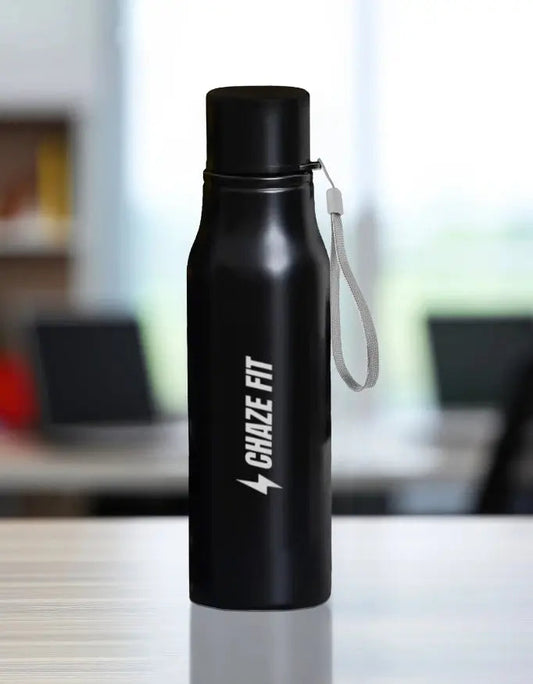
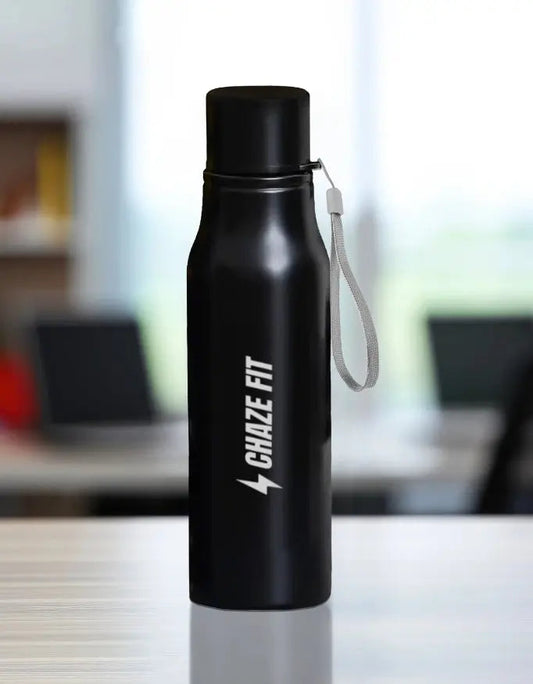
- The Chaze Fit Stainless Steel Water Bottle is built with both double-wall insulation and 304-grade steel for this specific use case
Recommended Product
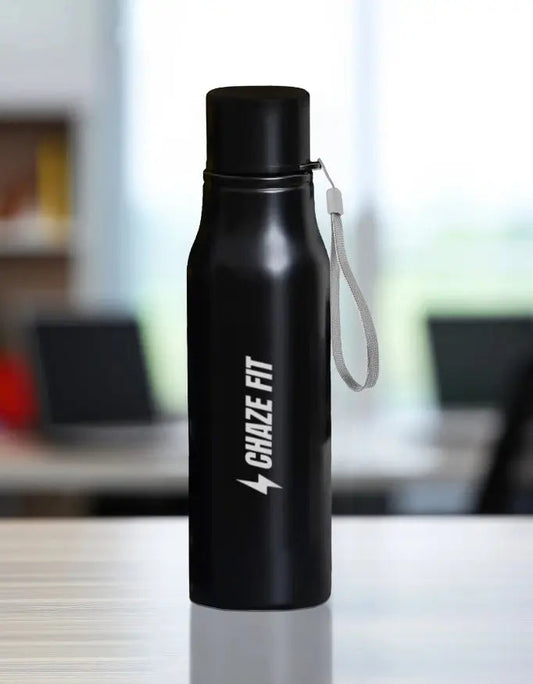
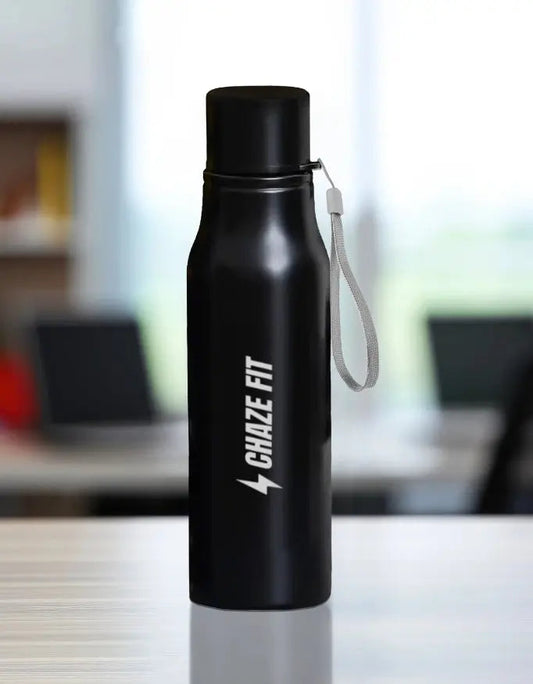
Chaze Fit Stainless Steel Water Bottle
304 steel · Laser engraved · 12hr cold retention · ₹749
Shop Double-Wall Vacuum Steel Bottle For Cars →Why This Is A Real Problem, Not A Minor Inconvenience
For anyone who drives to the gym, keeping a bottle in the car between sessions - or through a full workday - is common practice in Indian cities. But a parked car in direct sun during Indian summer isn't a mild environment. Interior temperatures can reach 45-50°C within an hour, even when the outside ambient temperature is a comparatively moderate 32-35°C, because a closed car acts as a greenhouse, trapping solar radiation. Most water bottle guides are written assuming gym or outdoor use, and don't address what happens to a bottle sitting in this specific environment for hours at a stretch.
What Happens To Each Bottle Type In A Hot Car
| Bottle Type | Behaviour At 45-50°C Car Interior |
|---|---|
| Plastic (single-wall) | Risk of chemical leaching increases with sustained heat; some structural softening possible at the upper end of this range |
| Single-wall aluminium | No meaningful insulation - contents reach near car-interior temperature within 30-60 minutes |
| Single-wall steel | Similar to aluminium - no insulation layer to resist heat transfer |
| Double-wall vacuum steel (304 grade) | Vacuum layer significantly slows heat transfer; contents stay noticeably cooler than car interior over comparable periods |
Why Steel Grade Also Matters Here, Not Just Insulation
Repeated heat cycling - a bottle heating up in a hot car and cooling down again daily, over months - places more stress on the metal and any seams or welds than a stable-temperature environment does. This is one of the specific scenarios where the corrosion-resistance gap between 304 and 201 stainless steel becomes more relevant, since accelerated thermal cycling can expose weaknesses in lower-grade steel faster than steady daily use alone. For the full grade comparison, read our article on why steel grade determines heat resistance over time.
Founder Note: The Car Cup Holder Test
I started deliberately leaving a test bottle in my car's cup holder through Mumbai summer afternoons - not in shade, direct sun through the windscreen - and checking water temperature at intervals through the day. A single-wall aluminium bottle reached near car-interior temperature within about 45 minutes. The double-wall vacuum steel bottle stayed noticeably cooler through several hours in the same conditions. That test is part of why the Chaze Fit steel bottle specification includes both the vacuum insulation and the 304 steel grade together - one manages the heat transfer, the other manages the long-term wear from repeated exposure.
- Ankit Mange, Founder, Chaze Fit
Practical Tips For Storing A Bottle In A Hot Car
- Avoid direct sun exposure where possible: Even an insulated bottle performs better out of direct sunlight, such as in a glovebox or under a seat rather than a dashboard cup holder.
- Don't leave a completely full bottle sealed in extreme heat: Liquid expansion at very high temperatures can build pressure against a tightly sealed lid.
- Choose insulated over single-wall for any bottle living primarily in a car: The performance gap is significant enough to matter for daily use, not just occasional convenience.
The Chaze Fit Solution
The Chaze Fit Stainless Steel Water Bottle (₹749) combines double-wall vacuum insulation with 304-grade steel specifically to handle both the temperature and durability demands of Indian car storage. For every other specification behind this build, read our article on every specification that determines bottle quality.
Related Articles
- 304 vs 201 Stainless Steel - Why The Grade Matters
- The Complete Guide To Engraved Steel Water Bottles
- How To Care For A Double-Wall Insulated Steel Bottle
Frequently Asked Questions
Q1: Is it safe to leave a plastic water bottle in a hot car?
Not ideal for repeated, sustained exposure. Indian car interiors can reach 45-50°C in summer, and plastic carries chemical leaching risk plus possible structural softening at the higher end of that range.
Q2: What water bottle stays coolest in a hot car?
A double-wall vacuum-insulated steel bottle. The vacuum layer significantly slows heat transfer compared to single-wall metal or plastic bottles.
Q3: How hot does a car actually get in Indian summer?
Interior temperatures regularly reach 45-50°C in direct sun, even when outside ambient temperature is a more moderate 32-35°C, due to the greenhouse effect of a closed vehicle.
Q4: Does steel grade matter for a bottle that lives in a hot car?
Yes, more than in stable-temperature use. Repeated daily heat cycling stresses seams and welds more than steady conditions, making the corrosion resistance of 304-grade steel more relevant than it might be for occasional use.
Q5: Should I keep a full, sealed bottle in a hot car?
Some caution is warranted - liquid expansion at extreme temperatures can build pressure against a tightly sealed lid. Avoiding direct sun exposure where possible reduces this risk.
Follow Chaze Fit on Instagram for training tips, product drops, and behind-the-scenes testing.
Follow @chazefit →About The Author
Ankit Mange is the founder of Chaze Fit. The car cup-holder heat testing described in this article was conducted personally across Mumbai summer conditions before confirming the double-wall insulation and steel grade specification.
Tags:
Previous
304 vs 201 Stainless Steel - Why The Grade Matters For Your Gym Bottle
Next
Best Engraved Gym Bottle For Gifting In India
Related articles
-
Jul 19 2026
How To Care For A Double-Wall Insulated Steel Bottle
-
Jul 19 2026