
The Monsoon Gear Problem Nobody Talks About: Why Indian Gym Gear Fails Hardest In July And August

Last Updated: August 2026 | Author: Ankit Mange, Founder, Chaze Fit | Reading Time: 6 minutes
Indian monsoon humidity is harder on gym gear than summer heat, because heat alone doesn't stop sweat from evaporating - humidity does. Between June and September, relative humidity in cities like Mumbai, Chennai, Kolkata, and coastal Karnataka regularly stays above 85% for weeks at a time. Delhi and NCR see humidity spikes to 75-85% in July and August, alternating with drier spells. At these humidity levels, gym gear stays damp for hours after a session instead of drying out - and that prolonged dampness, not heat itself, is what actually accelerates bacterial odour, mildew, and fabric degradation.
Why Humidity Matters More Than Heat For Gear Failure
Heat makes you sweat more. Humidity determines how long that sweat stays on and in your gear afterward. A gym vest that would air-dry in an hour in dry winter conditions can take several hours longer to fully dry during peak monsoon humidity - and if it goes back into a closed gym bag before it's genuinely dry, bacteria get a head start they wouldn't get in drier conditions. This is the mechanism behind most monsoon-season gear complaints: not a single dramatic failure, but a moisture-retention problem that compounds with every session that doesn't fully dry between uses.
What Actually Happens To Different Materials
| Material | Monsoon Risk | Why |
|---|---|---|
| Cotton apparel | Slower drying, faster odour buildup | Cotton absorbs and holds moisture rather than wicking it away |
| Canvas gym bags | Mildew risk if stored damp | A sealed bag with damp contents traps moisture against fabric |
| Cotton caps | Slower drying, salt residue buildup | Dense cotton drill takes longer to fully air out than synthetic mesh |
| Plastic bottles | Bacterial growth in cap threads | Micro-scratches and threading trap moisture and residue |
| Stainless steel/aluminium bottles | Lower risk | Non-porous surface, nothing for bacteria to embed into |
City-By-City Reality
- Mumbai and coastal Kerala (June-September): Sustained 85-95%+ humidity for months. Gear left in a closed gym bag can develop mildew within a couple of days if not aired out.
- Delhi and NCR (July-August): Humidity spikes to 75-85% but alternates with drier spells - the wet-dry cycling stresses elastic and fabric structure differently than sustained humidity.
- Bangalore (June-October): Moderate humidity (65-75%) but frequent light rain means gear rarely gets full sun exposure to dry, so slow-drying fabrics stay problematic longer than the humidity number alone suggests.
- Chennai and Kolkata: Baseline humidity rarely drops below 70% even outside peak monsoon months, making this a longer-duration concern than just June-September.
Why Most Gym Gear Isn't Built With This In Mind
Much of the gym gear sold in India is designed and tested for general conditions, not specifically for sustained 85%+ humidity. A "quick-dry" claim tested in 40% humidity and the same claim tested in 90% humidity describe genuinely different real-world performance, even though the label doesn't distinguish between them.
How Chaze Fit's Specifications Address This
Rather than building a separate "monsoon" product line, Chaze Fit's existing specifications were chosen with year-round Indian conditions in mind, including monsoon humidity:
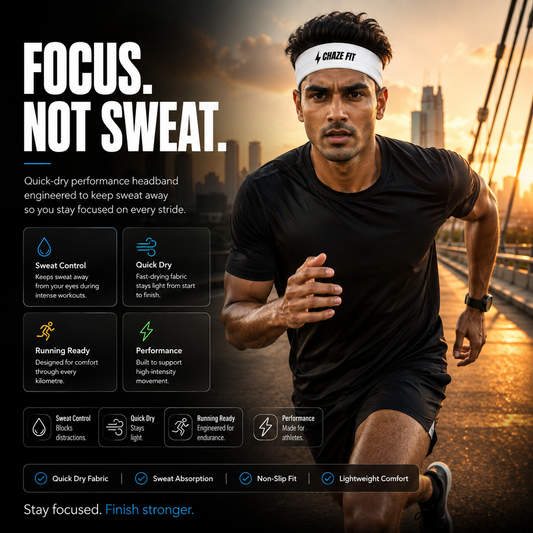
- Sports headband: Quick-dry poly-spandex with a 4mm silicone grip strip - dries faster than cotton and the silicone grip maintains hold even when damp. See our headband wash care guide for drying best practices.
- Gym bag: 250 GSM canvas, tested to zero eyelet failure across 60 days of daily 2.3kg loading. Canvas is more moisture-resistant than thin polyester, though any bag benefits from being aired out rather than left sealed with damp contents.
- Water bottles: Food-grade aluminium (Hydro Max) and 304 stainless steel (Steel Edge) - both non-porous, so there's no fibre or micro-scratch structure for mildew or bacteria to establish in, unlike plastic.
- Sports cap: Cotton drill with a PE-stiffened brim - denser than plain-weave cotton, which helps it hold structure, though like any cotton item it benefits from full air-drying rather than rushed storage.
Founder Note
Monsoon isn't a two-month inconvenience for Indian fitness - across coastal cities specifically, it's closer to four or five months of conditions most gear specifications simply weren't tested for. We test our own products in actual Mumbai monsoon conditions rather than a controlled lab, because that's the environment they'll actually be used in for a meaningful part of the year.
- Ankit Mange, Founder, Chaze Fit
A Practical Monsoon Gear Checklist
- Never leave damp gear sealed in a closed bag. This is the single biggest factor - air everything out within 30 minutes of a session where possible.
- Wash within a day of wearing, not after several sessions pile up. The longer bacteria have to establish, the harder a single wash is to fully remove them.
- Choose non-porous bottle materials - steel or aluminium over plastic - to reduce mildew and bacterial growth risk in humid storage.
- Check elastic and grip components periodically - repeated wet-dry cycling stresses these faster than steady conditions.
Related Articles
- Why Do Gym Clothes Smell Even After Washing?
- Why Does New Gym Wear Smell Like Chemicals?
- Why Do Terry Cotton Sweatpants Smell Musty After Washing In Monsoon Season?
Frequently Asked Questions
Q1: Why does gym gear fail faster during monsoon than summer?
Heat alone doesn't stop sweat from evaporating - humidity does. During monsoon, gear stays wet for hours after a session, which accelerates bacterial growth, mildew, and fabric degradation.
Q2: Does monsoon humidity affect all gym gear equally?
No - moisture-retentive materials like cotton and porous plastics suffer most. Non-porous materials like steel and aluminium hold up better.
Q3: Is monsoon humidity worse for gear than summer heat?
For moisture-related failures specifically, yes - humidity directly prevents gear from fully drying between uses, which is the root cause of most monsoon gear complaints.
Follow Chaze Fit on Instagram for training tips, product drops, and behind-the-scenes testing.
Follow @chazefit →About The Author
Ankit Mange is the founder of Chaze Fit.
Tags:
Previous
Best Gym Wear Brands In India - An Honest Comparison
Next
Best Gym Gifts Under ₹1000 In India
Related articles
-
Aug 20 2026