
Last Updated: August 2026 | Author: Ankit Mange, Founder, Chaze Fit | Reading Time: 8 minutes
Plastic shaker bottles - the ones most Indian gym-goers carry to the gym, the office, and everywhere in between - shed microplastic particles into their contents over repeated use, and this is a well-documented finding in scientific research, not a fringe claim. Steel and food-grade aluminium bottles don't have this problem, because plastic polymers are the specific material that degrades into plastic particles; metal doesn't. This isn't something that needed a Chaze Fit lab test to establish - it's basic material science, and it's the actual reason we build our bottles from 304 stainless steel and food-grade anodised aluminium instead of plastic.

Quick Summary
- Plastic containers, including shaker bottles, are documented in scientific research to shed microplastic particles into their contents, particularly with repeated use, heat, scratching, and vigorous shaking
- Long-term human health effects of microplastic ingestion are still an active area of research - the shedding itself is established, the full downstream health picture is still developing
- Stainless steel and food-grade aluminium do not shed microplastics, because they are not plastic polymers - this is a materials fact, not a marketing claim
- Most Indian gym-goers use plastic shakers primarily out of cost and habit, not because they've compared alternatives
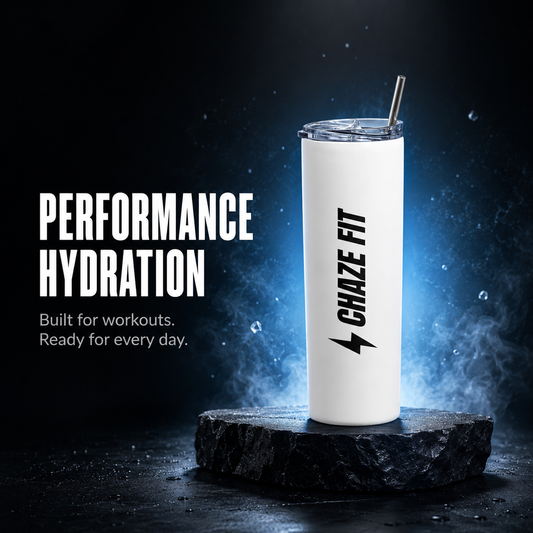
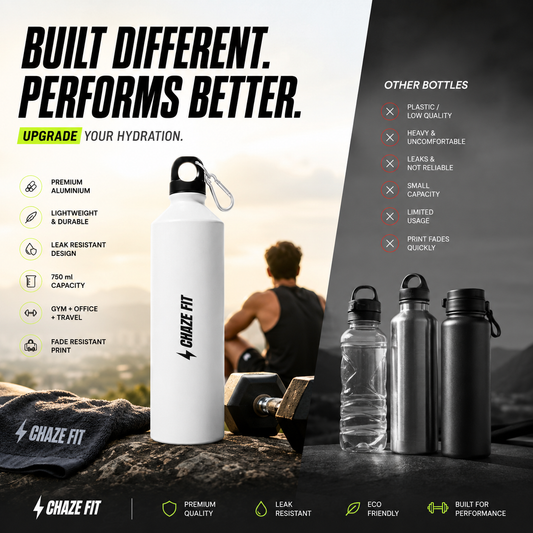
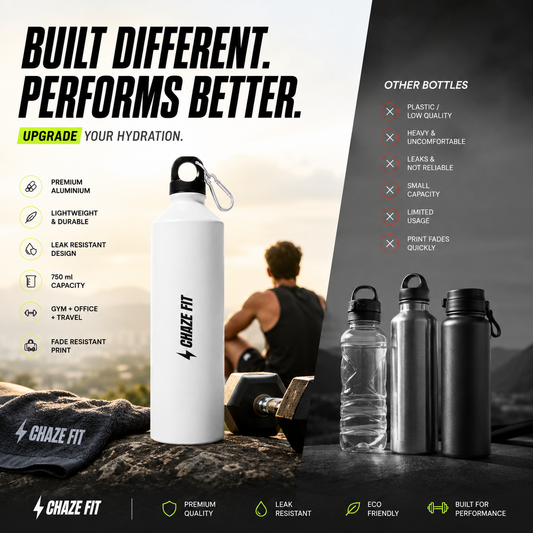
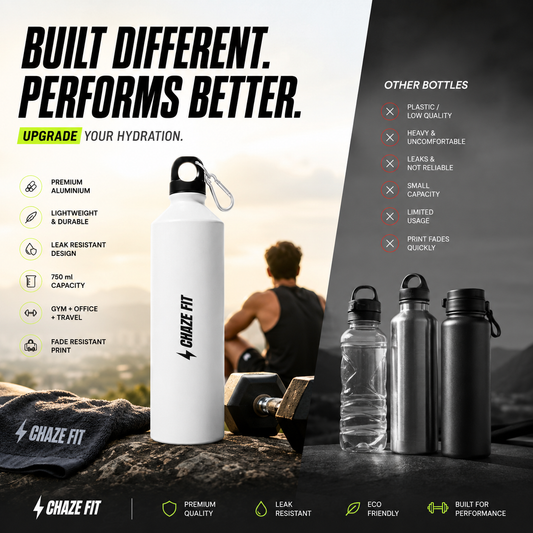
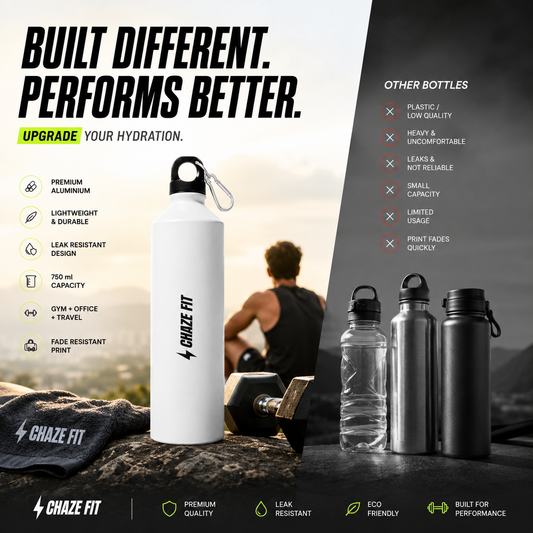
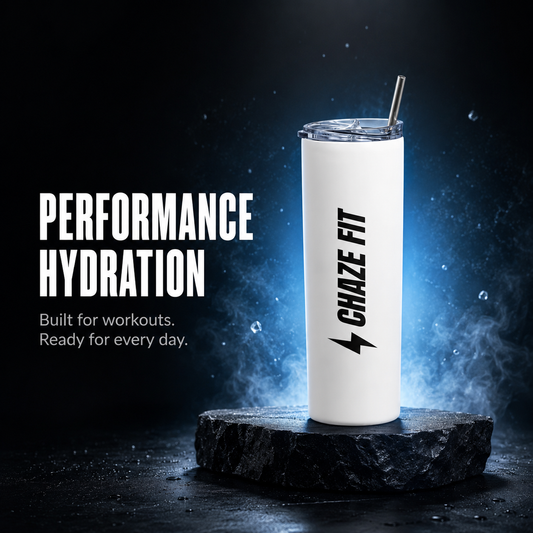
- Chaze Fit's Steel Edge Tumbler (304 steel) and Hydro Max Sipper (food-grade anodised aluminium) are both plastic-free daily-carry alternatives at accessible price points
What The Research Actually Shows
Multiple independent studies over the past several years have found microplastic particles in liquids stored in plastic containers, including reusable plastic bottles and shaker cups. The mechanism is straightforward: plastic polymers physically degrade at a microscopic level with repeated mechanical stress (shaking, scratching from bottle brushes or dishwasher cycles), UV exposure, and heat - and that degradation sheds tiny particles directly into whatever liquid the container holds. Vigorous shaking, which is the entire point of a protein shaker, is exactly the kind of repeated mechanical stress that accelerates this process.
What's important to be honest about: the science on shedding itself is well-established, but the specific long-term health consequences of regularly ingesting microplastics in humans are still being actively researched. Studies have found microplastics in human blood, tissue, and organs, and some research points to potential inflammatory and cellular effects - but a fully settled, comprehensive picture of exactly how much exposure causes exactly what harm doesn't exist yet. We're not going to overstate that research to make a stronger sales pitch. What we can say plainly is that avoiding unnecessary daily plastic-liquid contact, where a practical alternative exists, is a reasonable precaution that health researchers broadly support - not an extreme position.
Why Daily Shaker Use Specifically Makes This Worse
A shaker bottle isn't just holding water passively - it's being shaken vigorously multiple times a day, often for months or years without replacement, frequently exposed to direct sun in a gym bag or car, and regularly run through hot-water washing or a dishwasher. Each of these is an accelerant for plastic degradation. A shaker that looks fine on the outside can already be shedding particles well before it looks visibly worn, since the degradation happens at a microscopic level long before scratches or clouding become visible to the eye.
Why This Hasn't Changed Buying Habits In India Yet
Plastic shakers dominate Indian gyms mostly for two reasons: they're the cheapest option on the shelf, and most people have simply never directly compared the price gap against steel or aluminium alternatives, which have become meaningfully more affordable and widely available in India over the last few years. A ₹150-250 plastic shaker still feels like the obvious budget choice next to what people assume steel costs - but that price gap has narrowed considerably, and it's worth an honest comparison rather than an assumption.
Founder Note
I'm not going to pretend we ran some proprietary lab test proving Chaze Fit bottles eliminate microplastics - that's not how this works, and claiming it would be dishonest. Steel and aluminium simply don't have this problem the way plastic does, because they're not plastic. That's the whole argument. What we did test, and what we do stand behind with real data, is insulation performance, leak resistance, and daily-use durability - the things that actually differentiate one steel bottle from another. The plastic-vs-metal question isn't really a competition between brands, it's a material choice.
- Ankit Mange, Founder, Chaze Fit
The Material Comparison
| Factor | Plastic Shaker | 304 Stainless Steel | Food-Grade Aluminium |
|---|---|---|---|
| Sheds microplastics | Yes, documented in research | No - not a plastic polymer | No - not a plastic polymer |
| Degrades with heat/UV/shaking | Yes | No meaningful degradation | No meaningful degradation |
| Retains odour over time | Common complaint | Minimal with correct care | Minimal with correct care |
| Typical lifespan | 3-12 months of daily use | Years | Years |
| Typical India price | ₹150-250 | ₹999 (Chaze Fit Steel Edge) | ₹649 (Chaze Fit Hydro Max) |
Choosing Between Steel And Aluminium
Both materials solve the plastic problem equally well - the choice between them comes down to weight and use case, not safety. The Chaze Fit Steel Edge is heavier (300g) but insulated, keeping drinks cold for 12+ hours. The Chaze Fit Hydro Max is lighter (180g) for daily carry but with shorter 3-4 hour cold retention. For the full breakdown, see our aluminium vs steel vs plastic comparison.
Switched from plastic already?
If you moved from a plastic shaker to steel or aluminium, what actually changed for you, taste, smell, how long it lasted? Leave a review on the product page with the real comparison, or tag @chazefit on Instagram. We read every one.
Related Articles
- Aluminium vs Steel vs Plastic Water Bottle
- Steel vs Plastic Protein Shaker Bottle
- Is An Aluminium Bottle Safe For Daily Drinking Water?
- 304 vs 201 Stainless Steel - Why The Grade Matters
- The Complete Hydration Guide
Frequently Asked Questions
Q1: Do plastic shaker bottles release microplastics into water?
Yes. Research has found that plastic containers shed microplastic particles into their contents, and this increases with repeated use, scratching, heat exposure, and vigorous shaking - all common with daily shaker bottle use. This is well-documented in scientific literature, though research into the specific long-term health effects of ingesting these particles is still ongoing.
Q2: Is it safe to drink from a plastic shaker bottle every day?
Occasional use is unlikely to pose a significant concern, but daily use over years, especially with hot liquids, direct sunlight exposure, or a bottle that shows visible scratching or clouding, increases microplastic shedding. Health researchers generally recommend minimising unnecessary microplastic exposure where practical alternatives exist, even though the full long-term health picture isn't fully settled yet.
Q3: Do steel bottles have the same microplastic problem as plastic?
No. Stainless steel and food-grade aluminium don't degrade into microplastic particles - this is basic material science rather than something that needs a lab test, since only plastic polymers break down into plastic particles. A steel or aluminium bottle can still develop metal-specific wear over years, but it's a fundamentally different, well-understood material behaviour.
Q4: Why do so many Indians still use plastic shaker bottles daily?
Mainly cost and habit. Plastic shakers are the cheapest, most widely available protein-mixing option in India, and most gym-goers simply haven't seen the actual price difference against steel and aluminium options, which have become significantly more affordable and widely available in the last few years.
About The Author
Ankit Mange is the founder of Chaze Fit.
Follow Chaze Fit on Instagram for training tips, product drops, and behind-the-scenes testing.
Follow @chazefit →
Tags:
Previous
Buy Hydro Max Sipper Bottle Online India: Price & Availability
Next
Borosil vs Milton: Which Tumbler Brand Is Better For Everyday Use?