India's ₹37,700 Crore Fitness Market Has A Specification Problem - Not A Price Problem

Quick answer: Gym gear should be judged by its fit, construction and intended use, not price alone. This article argues for checking product specifications and the evidence behind performance claims before buying.
Last Updated: July 2026 | Author: Ankit Mange, Founder, Chaze Fit | Reading Time: 9 minutes
India's commercial fitness market is projected to reach ₹37,700 crore by 2030 at 15% CAGR. The dominant failure blocking Indian gym-goers from benefiting from this growth is not price - it is specification. Gym vests at 100-140 GSM that turn transparent when wet. Water bottles tested at 22°C that go warm at 30°C. Drawstring bags at 150 GSM that tear in 6 weeks under daily 2kg loading. The products exist. The market has money. The gap is that nobody tested the products in Indian conditions before selling them.
The Size Of The Opportunity - And The Failure Inside It
India's fitness numbers are genuinely impressive. The commercial fitness market growing from ₹16,200 crore in 2024 to ₹37,700 crore by 2030. Gym memberships expected to nearly double. 65,000+ facilities operating across the country. Young professionals, office workers, students, athletes, runners, cyclists, and daily commuters all becoming consistent fitness consumers.
This growth is creating demand for something specific: gym accessories and sportswear that supports daily fitness routines without failing. The research is clear on what Indian fitness consumers want - comfort, durability, sweat resistance, value for money, versatility across gym and daily wear.
The product market is failing to deliver on exactly these dimensions. Not because the products are expensive. Because they are unspecified.
What Unspecified Means In Practice
Unspecified does not mean unknown. It means untested against the conditions where the product will actually be used.
Indian non-AC gym floors in Mumbai, Chennai, Hyderabad, and Delhi run at 28-36°C for most of the year. International gym wear is designed for 20-22°C climate-controlled gyms. The temperature differential is 10-16°C. This changes everything about how fabrics behave, how quickly bottles lose temperature, how fast headbands saturate, how drawstring bags hold up under daily loading in humidity.
A brand that tests its gym vest in a 22°C lab and finds it performs correctly is not wrong about the test result. It is wrong about the test conditions. The same vest, in a 31°C non-AC Mumbai gym, under direct overhead fluorescent lighting, at full sweat saturation after 20 minutes, will perform differently. The question of whether it turns transparent was never asked.
This is the specification problem.
The Specification Gaps By Product Category
Gym Vests
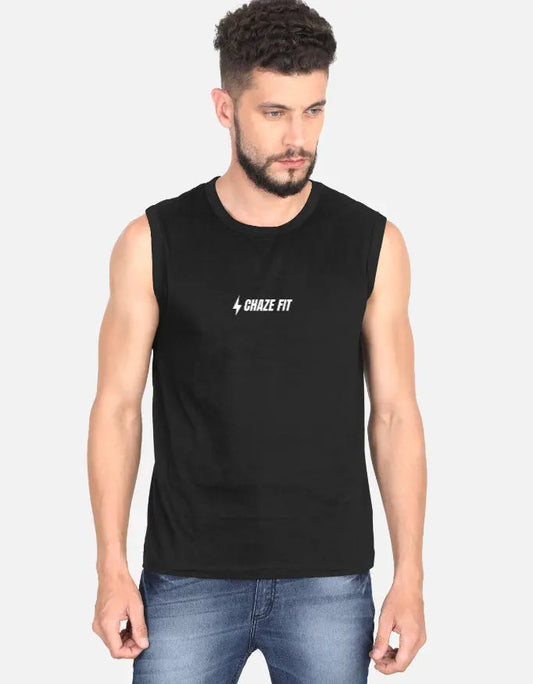
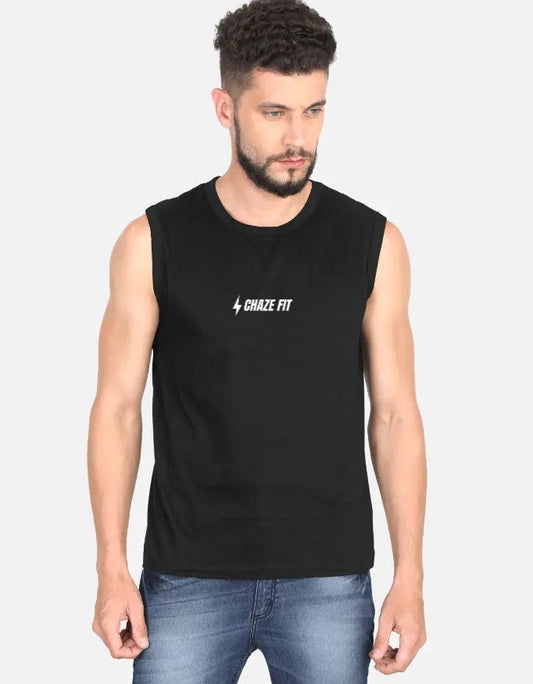
The correct specification for a gym vest that does not turn transparent under Indian fluorescent gym lighting when wet is 180 GSM minimum cotton. Below 160 GSM, cotton becomes semi-transparent at full sweat saturation under direct overhead fluorescent. Most Indian gym vests at ₹149-599 use 120-150 GSM. The specification gap is 30-60 GSM. For the full testing data, read our complete guide to gym vests in India.
Water Bottles
The correct specification for a gym bottle that keeps water cold through a 60-minute session in a 30°C Indian non-AC gym is food-grade aluminium (cold 3-4 hours) or double-wall vacuum steel (cold 12+ hours). A plastic bottle at 30°C ambient reaches near-ambient temperature in 20-30 minutes. Most Indian gym-goers carry plastic. The specification gap is the difference between 20 minutes of cold water and 3-4 hours. For the temperature data, read our complete guide to gym water bottles in India.
Gym Bags
The correct specification for a drawstring gym bag that survives Indian daily use (2.3kg load, 6 lifts per day) is 250 GSM canvas minimum with metal eyelets. 120 GSM polyester tears at the eyelet by day 14. 150 GSM by day 42. 250 GSM canvas: zero eyelet failure at day 60 in testing. Most Indian drawstring gym bags use 100-150 GSM polyester. For the load testing data, read our complete guide to gym bags in India.
Travel Sweatpants
The correct specification for sweatpants that handle Indian travel - 30°C airport terminals, 21°C aircraft cabins, 4-8 hours of sitting - is 260 GSM terry cotton in an oversized relaxed fit with a drawstring waist. Fleece at 320-400 GSM overheats above 22°C. Slim joggers with fixed elastic waists create compounding pressure after 90 minutes of sitting. For the 12-route travel test data, read our complete guide to sweatpants for travel in India.
Why The Specification Problem Is Hard To See At Point Of Sale
The failures described above are all invisible in product photos. You cannot see GSM in a listing image. You cannot see whether the headband has silicone grip until sweat hits it at minute 20. You cannot see whether the bag eyelet will survive 60 days of daily loading. The failures are invisible at purchase and undeniable at use.
This is why the specification problem persists. Buyers cannot evaluate the specification from a photo or a description that says "premium quality." They can only discover the failure during use. And since each failure costs ₹200-600 and happens over 4-11 weeks, the feedback loop is slow. By the time the buyer understands that the product was misspecified, they have already discarded it and moved to the next one.
The solution is not better marketing. It is specification transparency: stating the GSM, the test conditions, the actual measurement, so the buyer can evaluate the product before purchasing rather than after discarding.
Why This Gap Persists Even As The Market Matures
A reasonable question: shouldn't normal market competition close a gap this obvious as the fitness market grows and more brands enter? In most consumer categories, yes - but Indian gym gear has a specific structural feature that slows this correction: the failure signal is weak and delayed relative to the purchase decision.
Compare this to a category where specification problems get corrected quickly - smartphones, say, where battery life or screen quality failures show up within days and get reflected in reviews almost immediately, creating fast competitive pressure. A gym vest's transparency problem only shows up under specific conditions (heavy sweat, direct fluorescent light, usually noticed by other gym-goers rather than the wearer themselves in the moment). A bag's eyelet failure takes 6-11 weeks to manifest. By the time a buyer connects the failure to the original purchase decision, they've often already moved on to a different bag from a different brand, and the specific causal link between "120 GSM polyester" and "it tore" never gets articulated in a review or return reason, because most buyers don't have the vocabulary to describe why it failed - only that it did. This delayed, poorly-articulated feedback loop is a structural reason the specification gap has persisted even through several years of rapid market growth, rather than self-correcting the way faster-feedback categories do.
What Chaze Fit Is Doing About It
Chaze Fit is a Mumbai-based D2C brand that tests every product in Indian conditions and publishes the findings. Not "premium quality" - 180 GSM, tested at four saturation levels under direct fluorescent lighting. Not "long-lasting" - zero eyelet failure at 60 days of 2.3kg daily loading. Not "stays cold" - cold for 3-4 hours at 30°C ambient, measured at 30-minute intervals.
The research on what Indian fitness consumers want - comfort, durability, sweat-resistance, value - is correct. The gap is not demand. The gap is products described specifically enough that buyers can verify these properties before purchasing.
Full brand overview: What Is Chaze Fit?
Continue reading
For the next step, explore this related guide.
Related Reading
- India's ₹37,700 Crore Fitness Boom - Tier 1 vs Tier 2 City Growth Data
- 5 Gym Gear Failures Indian Consumers Report Most
- Five Things Indian Gym-Goers Keep Buying Wrong - And What To Buy Instead
Frequently Asked Questions
Q1: What is India's fitness market size in 2024?
Approximately ₹16,200 crore, growing at 15% CAGR toward ₹37,700 crore by 2030, with 23+ million gym members across 65,000+ commercial fitness facilities.
Q2: Why does Indian gym gear fail so quickly?
Because most Indian gym gear is manufactured to a specification that was not tested in Indian conditions - 28-36°C ambient temperatures, high humidity, and fluorescent gym lighting. The products work in 20-22°C international gym conditions. They fail in Indian ones.
Q3: What GSM is correct for a gym vest in India?
180 GSM minimum cotton. Below 160 GSM, cotton turns semi-transparent under direct overhead fluorescent lighting when fully sweat-saturated in Indian gym conditions. The Chaze Fit FlexDry Gym Vest uses 180 GSM.
Q4: What is the best water bottle for Indian gym conditions?
Food-grade aluminium for 3-4 hours cold (Chaze Fit Hydro Max, ₹649) or double-wall vacuum-insulated steel for 12+ hours cold (Chaze Fit Steel Edge, ₹999). Both tested at 30°C ambient in Indian non-AC gyms.
Q5: What canvas weight is correct for an Indian gym bag?
250 GSM minimum canvas with metal eyelets. 120-150 GSM polyester fails at the eyelet within 2-6 weeks of daily 2-3kg gym loading. The Chaze Fit AOP Drawstring Gym Bag uses 250 GSM canvas.
Q6: Why hasn't market competition already fixed the Indian gym gear specification problem?
Because the failure signal is slow and weak relative to fast-feedback consumer categories. A gym bag eyelet failure takes 6-11 weeks to manifest, and most buyers don't have the vocabulary to trace the failure back to "120 GSM polyester" in a review - they only know it tore. This delayed, poorly-articulated feedback loop has let the specification gap persist through years of market growth rather than self-correcting.
Tags:
Previous
The Training Partner Comment That Turned Chaze Fit Into A Company
Next
From Plastic To Performance: Why Indian Gym-Goers Are Switching To Steel And Aluminium Bottles
Related articles
-
Sep 02 2026