

Direct answer: Thigh chafing during squats is almost always caused by one of three things: 2-way stretch fabric that doesn't recover after a deep squat, damp fabric holding sweat against skin instead of wicking it away, or an inner seam that sits directly on the inner thigh. Genuine 4-way stretch fabric with a mesh-lined interior - like the Chaze Fit Sports Shorts - fixes all three by recovering fully after each rep and moving moisture off skin instead of trapping it.
Featured Product
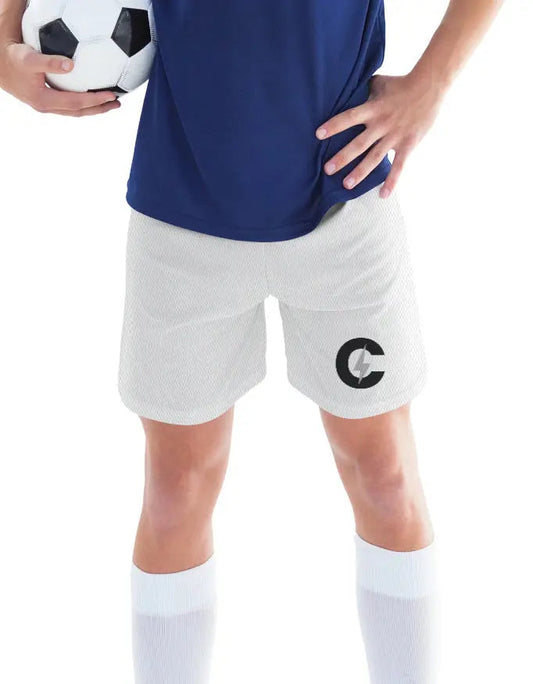
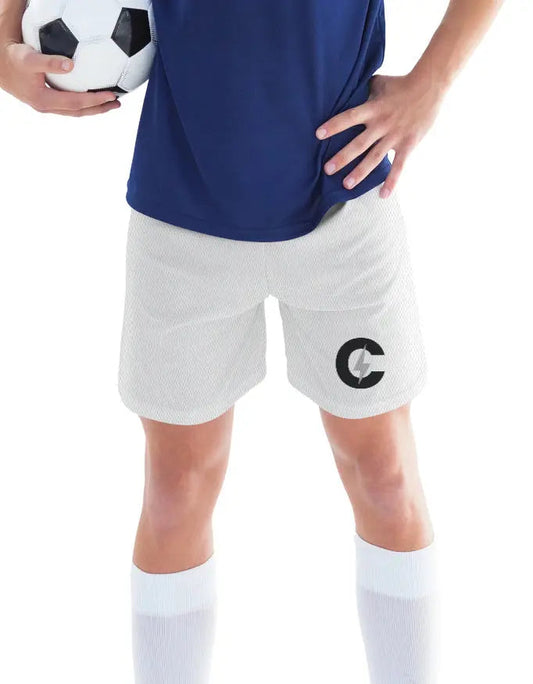
Chaze Fit Quick-Dry Gym Shorts
4-way stretch · Built-in liner · ₹799
Shop Anti-Chafe Squat Shorts →
Chafing Isn't Bad Luck - It's A Fabric Problem
If you've ever finished a leg day and found raw, reddened skin on your inner thighs, the instinct is to blame friction from "just moving a lot." But friction alone doesn't explain why some shorts chafe and others don't during the exact same workout. The real variable is what's happening at the fabric-skin interface during a squat: how much the fabric moves against your skin, and how wet that fabric gets while it's moving.
Every deep squat stretches the fabric across your inner thigh in two directions at once - lengthwise as your leg bends, and widthwise as your thighs separate. If the fabric can only stretch one way (2-way stretch), it either restricts the movement (forcing your skin to do the sliding instead of the fabric) or it stays stretched out after the rep, bunching slightly and creating a fold that rubs on the next rep. This is the single biggest hidden cause of squat-day chafing.
The Moisture Factor: Why Dry Shorts Chafe Less
Sweat changes the coefficient of friction between fabric and skin. Dry cotton or synthetic fabric slides relatively smoothly; damp fabric grips and drags on skin with every movement, multiplying the friction load rep after rep. This is why chafing tends to show up 20-30 minutes into a session rather than on rep one - it's not that the fabric changed, it's that it got wet.
A true moisture-wicking blend moves sweat away from the skin to the outer face of the fabric, where it evaporates instead of pooling. Cotton does the opposite - it absorbs and holds moisture right where it's generated, which is exactly why cotton shorts are consistently reported as the worst offenders for chafing on hot, high-sweat training days.
"We tested our Shorts specifically through squat and lunge blocks because that's the movement pattern that exposes bad fabric fastest. If a short survives 30+ sessions of heavy squatting without chafe complaints, the fabric and seam placement are doing their job." - Ankit Mange, Founder, Chaze Fit
Seam Placement Matters More Than People Think
Budget shorts often run an inner seam directly along the inseam line - exactly where your inner thighs make contact during a wide-stance squat or a lunge. A flat-lock or mesh-lined construction moves bulk seams away from direct high-friction zones, which is one reason a built-in mesh liner (rather than a raw inseam) reduces chafing independent of fabric choice.
Four Fixes That Actually Work
1. Choose genuine 4-way stretch fabric. Check the product description specifically for "4-way stretch" rather than assuming any stretch fabric is equal - 2-way stretch is far more common in budget shorts and is the primary driver of bunching during squats.
2. Prioritise moisture-wicking over cotton for hot-weather training. Cotton absorbs and holds sweat against skin; a wicking blend moves it away. This single swap eliminates most chafing complaints reported after the 30-minute mark of a session.
3. Check for mesh lining or a built-in liner. This adds a smooth inner layer between skin and outer seams. Read our full comparison on built-in liners vs compression shorts if you're deciding between the two approaches.
4. Use anti-chafe balm for extremely long sessions. Even with the right fabric, sessions over 90 minutes in high humidity may still benefit from a chafe balm at the inner thigh crease as a supplementary measure - the fabric choice reduces the problem, it doesn't eliminate friction physics entirely for marathon-length sessions.
What We Tested
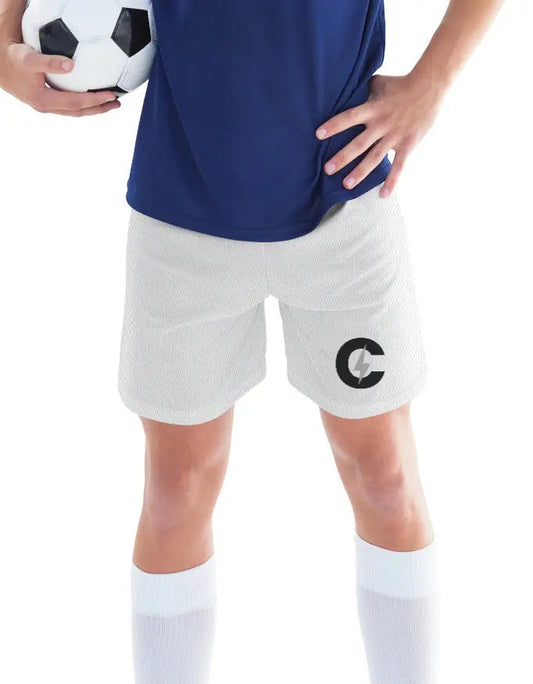
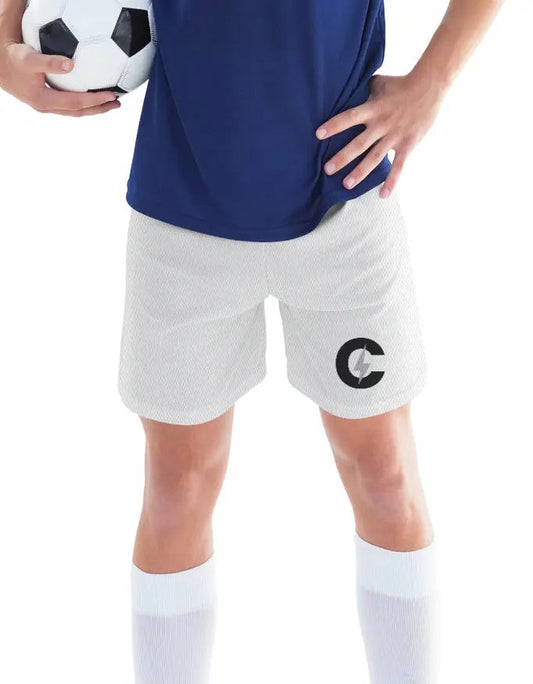
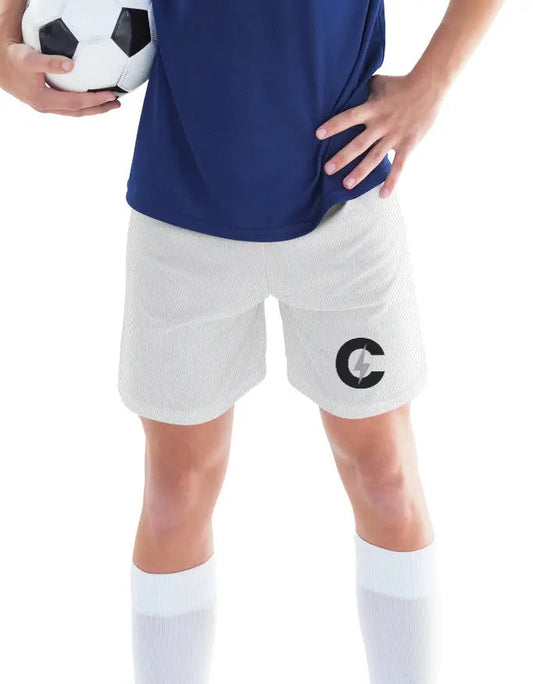
The Chaze Fit Sports Shorts use a 4-way stretch moisture-wicking blend with a mesh-lined interior, tested across 30+ sessions including dedicated squat and lunge blocks in 28-35°C training conditions. The fabric recovers fully after each rep rather than staying stretched, and the mesh lining sits between skin and the outer printed shell to reduce direct seam contact.
Cotton-blend shorts in the same price range showed measurably higher moisture retention at the 30-minute mark in side-by-side testing, consistent with more reported chafing in hot, high-sweat conditions. 2-way stretch shorts showed visible bunching at the inner thigh after repeated squat sets, while 4-way stretch fabric recovered to its original shape between reps.
When Chafing Points To A Sizing Issue, Not A Fabric Issue
If chafing happens immediately (within the first few reps, before sweat is even a factor), the shorts are likely too tight or too loose for your frame rather than a fabric problem. Shorts that are too tight bunch at the inseam; shorts that are too loose create excess fabric that folds and rubs. Sizing correctly is the first troubleshooting step before blaming the fabric - see our full sizing and fit guide for size-selection guidance.
Try It Yourself
The Chaze Fit Sports Shorts are built with 4-way stretch and a mesh-lined interior specifically to address squat-day chafing, priced at ₹799 in sizes S-XXL.
Shop the Chaze Fit Sports Shorts →
Frequently Asked Questions
1. Why do my gym shorts chafe only during squats and not other exercises?
Squats stretch fabric in two directions simultaneously (length and width), which exposes 2-way stretch fabric's limitations far more than single-direction movements like walking or cycling.
2. Does chafing mean my shorts are the wrong size?
Sometimes. Immediate chafing (within the first few reps) usually points to sizing; chafing that develops 20-30 minutes in usually points to moisture and fabric stretch.
3. Is 4-way stretch fabric actually different from 2-way?
Yes - 2-way stretch fabric only stretches along one axis, while 4-way stretch recovers along both width and length, which matters directly for squat and lunge movement patterns.
4. Does cotton cause more chafing than synthetic fabric?
Generally yes in hot, high-sweat conditions, because cotton absorbs and holds moisture against skin rather than wicking it away.
5. What is a mesh-lined interior and how does it help?
It's an inner fabric layer that sits between skin and the outer shorts fabric, reducing direct contact with bulkier outer seams.
6. Should I wear compression shorts underneath to prevent chafing?
It can help, but a built-in liner often achieves the same result without an extra heat-retaining layer. See our liner vs compression shorts comparison.
7. Can anti-chafe balm fix bad fabric choice?
It helps as a supplementary measure but doesn't fix the underlying fabric-stretch or moisture-retention issue - fabric choice matters more for repeated sessions.
8. Do Chaze Fit Shorts chafe during squats?
They're tested through dedicated squat and lunge blocks specifically to check for this, using 4-way stretch fabric and a mesh-lined interior.
9. Why does chafing get worse the longer I train?
Sweat accumulation increases fabric-skin friction over time, which is why chafing tends to appear 20-30 minutes into a session rather than immediately.
10. Are seams a bigger factor than fabric type?
Both matter - seam placement determines where friction concentrates, while fabric type determines how much moisture builds up to worsen that friction.
11. Does a wider or narrower short leg reduce chafing?
A regular fit with enough room through the thigh (rather than a very slim cut) generally reduces fabric-on-skin drag during squats.
12. How can I tell if fabric is 4-way stretch before buying online?
Check the product description or specification sheet specifically - it should state "4-way stretch" explicitly rather than just "stretch fabric."
13. Does washing shorts reduce their anti-chafe performance over time?
Fabric can lose some stretch recovery after very high wash counts; Chaze Fit Shorts are tested to maintain performance through 50+ wash cycles.
14. Is chafing more common in humid Indian conditions?
Yes - higher humidity slows sweat evaporation, which keeps fabric wetter for longer during a session and increases friction-related chafing risk.
15. What's the fastest fix if I'm chafing right now, mid-program?
Switch to a genuine 4-way stretch, moisture-wicking short with a mesh-lined interior, and apply anti-chafe balm as a short-term supplement while you make that switch.
Related Articles
- The Complete Guide To Quick-Dry Gym Shorts In India
- Built-In Liner vs Compression Shorts: Which Do You Actually Need?
- What Is 4-Way Stretch Fabric? (And Why It Matters)
- Best Gym Shorts In India - Tested & Reviewed
Follow Chaze Fit on Instagram for training tips, product drops, and behind-the-scenes testing.
Follow @chazefit →
Tags:
Previous
The Complete Guide To Quick-Dry Gym Shorts In India
Next
Built-In Liner vs Compression Shorts: Which Do You Actually Need?
Related articles
-
Aug 10 2026
Buy Sports Shorts Online India: Price & Sizes
-
Jul 17 2026