
Last Updated: July 2026 | Author: Ankit Mange, Founder, Chaze Fit | Reading Time: 6 minutes
UPF 50+ means a fabric blocks at least 98% of ultraviolet radiation, allowing 1/50th or less to pass through to the skin - UPF is measured on a scale from roughly 15 to 50+, and 50+ is the highest standard rating category. This is different from SPF (Sun Protection Factor), which is used for sunscreen and measures a different property. Nearly every arm sleeve listing quotes "UPF 50+" as a headline feature, but almost none explain what the number actually represents, how it's tested, or what the practical difference is between UPF 30 and UPF 50+.
Quick Summary
- UPF (Ultraviolet Protection Factor) measures how much UV radiation a fabric blocks, tested on a standardised scale
- UPF 50+ means 1/50th or less of UV radiation passes through - blocking at least 98%
- UPF is not the same measurement as SPF, which applies to sunscreen and works differently
- UPF is influenced by fabric weave density, fibre type, colour, and any UV-absorbing chemical treatment
- Standard UPF testing measures fabric in a flat, resting state - not under stretch (see our dedicated article on this)
- Almost no consumer-facing arm sleeve listing explains what the UPF number actually measures
Recommended Product
Chaze Fit Pro-Grade Arm Sleeves
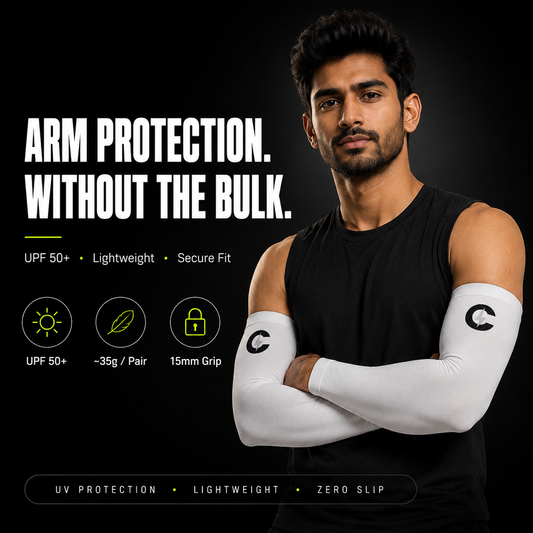
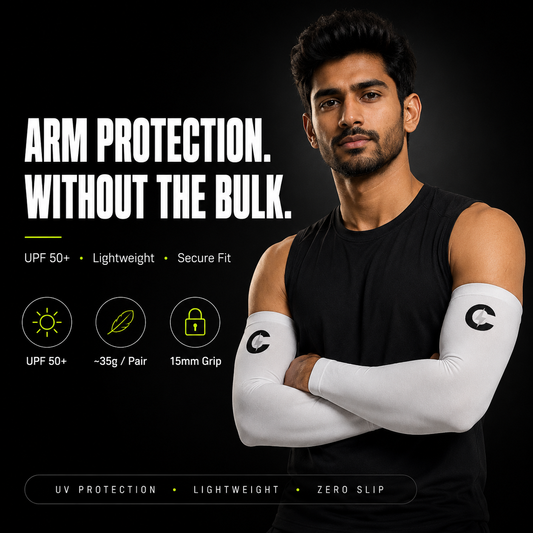
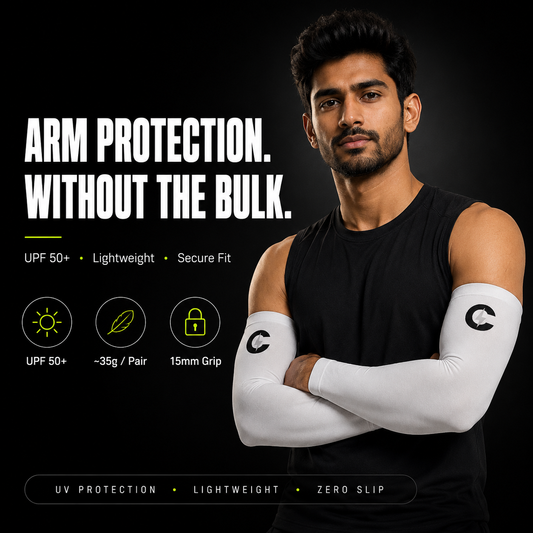
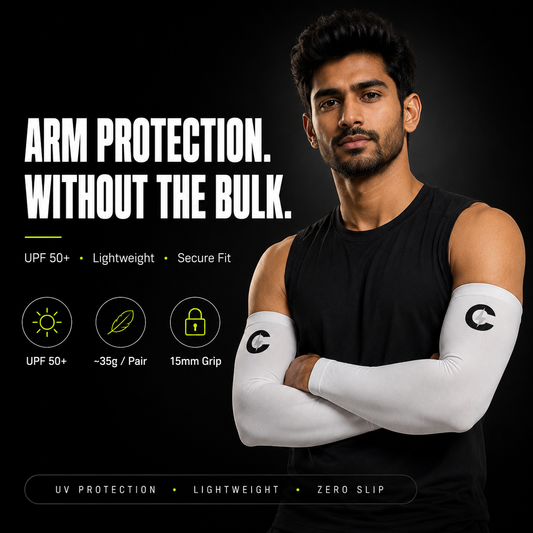
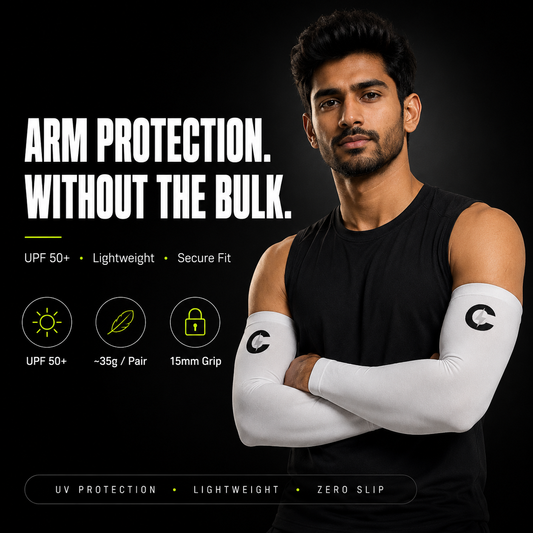
150 GSM printed mesh · UPF 50+ · 15mm silicone grip · ₹349
Shop UPF 50+ Arm Sleeves →UPF vs SPF: Why They're Not The Same Thing
SPF (Sun Protection Factor) is a sunscreen measurement that estimates how much longer skin with sunscreen applied can be exposed to UV before burning, compared to unprotected skin - it's primarily concerned with UVB radiation and burn risk. UPF (Ultraviolet Protection Factor) measures the percentage of both UVA and UVB radiation a fabric blocks, tested using a spectrophotometer that measures UV transmission directly through the material. They use different testing methods and aren't directly interchangeable numbers, even though both get used casually as "sun protection ratings" in marketing copy.
How The UPF Scale Actually Works
| UPF Rating | Approximate UV Blocked | Protection Category |
|---|---|---|
| UPF 15-24 | 93.3% - 95.9% | Good protection |
| UPF 25-39 | 96% - 97.4% | Very good protection |
| UPF 40-50+ | 97.5% - 98%+ | Excellent protection |
The practical takeaway: the difference between UPF 30 and UPF 50+ is smaller in absolute terms than the numbers suggest - both block over 96% of UV radiation. UPF 40 and UPF 50 sit even closer together, both in the "excellent protection" band at roughly 97.5% and 98% blocked respectively. The bigger practical variable, which almost no listing addresses, is whether that rating holds up consistently through wear, wash cycles, and stretch - not whether it's specifically 40 or 50.
What Determines A Fabric's UPF Rating
- Weave/knit density: Tighter construction with less gap between fibres blocks more UV.
- Fibre type: Some synthetic fibres inherently absorb or block more UV than others.
- Colour: Darker colours generally block slightly more UV than lighter ones of the same fabric, though this effect is secondary to weave density.
- Chemical UV-absorbing treatments: Some fabrics are treated with additives that specifically absorb UV radiation, boosting the rating above what weave density alone would achieve.
- Fabric condition: Stretch, wear, and repeated washing can all affect the rating over the life of the garment - a variable almost never disclosed by brands.
Founder Note: Why We Started Stating This Explicitly
Every arm sleeve product page I looked at before building ours - Indian and international brands both - used "UPF 50+" as a stated feature with zero further explanation. It works as a marketing shorthand because most buyers understand "higher number, better protection" without needing to know why. That's not wrong, exactly, but it also doesn't tell you anything about how that number was measured or whether it changes with wear. Once I understood the actual scale - and realised that UPF 30 and UPF 50+ block 96% and 98% of UV respectively, a smaller gap than the raw numbers imply - I wanted our own listing to explain what the rating means rather than just state it and move on.
- Ankit Mange, Founder, Chaze Fit
Does UPF Rating Change With Wear And Washing?
Yes, potentially. Repeated washing, especially with fabric softeners or in hot water, can degrade any chemical UV-absorbing treatment on a fabric faster than the base weave density itself degrades. Stretching the fabric during wear can also temporarily reduce effective UV blocking, since the physical gaps between fibres widen under tension - covered in detail in our article on whether UPF protection weakens under stretch. This is why wash care instructions - cold water, no fabric softener, air dry - matter more for UPF-rated garments than for ordinary activewear.
The Chaze Fit Pro-Grade Arm Sleeves
The Chaze Fit Pro-Grade Arm Sleeves (₹349) are rated UPF 50+ at 150 GSM printed mesh, tested both at rest and under stretch. For the full specification guide, read our article on the complete guide to arm sleeves in India.
Related Articles
- Does UPF 50+ Protection Weaken When The Fabric Stretches?
- The Complete Guide To Arm Sleeves In India
- Best Arm Sleeves For Indian Cyclists And Gym-Goers
THREE CLAIMS. THREE DIFFERENT CHECKS.
| Claim | Evidence to check | Do not assume |
|---|---|---|
| UV protection | Relevant product or fabric UPF test documentation | Any sleeve has a verified UPF rating |
| Compression | Defined pressure specification and intended use | Tight fit proves a medical benefit |
| Staying in place | Fit instructions and substantiated wear testing | A grip feature prevents every slip |
Product-specific ratings and performance statements need product-specific evidence. This checklist does not certify Chaze Fit sleeves.
Frequently Asked Questions
Q1: What does UPF 50+ mean exactly?
It means the fabric blocks at least 98% of UV radiation, allowing 1/50th or less to pass through to the skin. It's the highest standard UPF rating category.
Q2: Is UPF the same as SPF?
No. SPF measures sunscreen's burn-delay effect on skin, primarily for UVB. UPF measures how much UVA and UVB radiation a fabric blocks, tested with different methodology entirely.
Q3: UPF 40 vs 50 - is there a real difference?
The absolute difference is small - UPF 40 blocks about 97.5% of UV, UPF 50 blocks about 98%. Both fall in the excellent protection category. Consistency of that protection under stretch, wear, and washing generally matters more day-to-day than the specific number.
Q4: Is UPF 50+ much better than UPF 30?
The absolute difference is smaller than the numbers suggest - UPF 30 blocks about 96.7% of UV, UPF 50+ blocks about 98%+. Both offer strong protection; other factors like fit, coverage, and consistency of protection under wear often matter more.
Q5: Does washing reduce a fabric's UPF rating over time?
It can, particularly if the rating depends partly on a chemical UV-absorbing treatment rather than weave density alone. Hot water and fabric softener accelerate this. Cold wash and air dry are generally better for preserving the rating.
Q6: Why do so few brands explain what UPF actually measures?
"UPF 50+" functions well as a simple marketing shorthand - most buyers correctly infer "higher number, more protection" without needing the underlying mechanism explained. That's not incorrect, but it also leaves out useful context, like how the rating is tested and what can cause it to change.
Follow Chaze Fit on Instagram for training tips, product drops, and behind-the-scenes testing.
Follow @chazefit →About The Author
Ankit Mange is the founder of Chaze Fit. He researched UPF testing methodology and scale interpretation before setting the disclosure standard used across Chaze Fit's arm sleeve product content.
Tags:
Previous
Does UPF 50+ Sun Protection Weaken When The Fabric Stretches?
Next
Silicone Grip vs Elastic Band - Which Arm Sleeve Actually Stays In Place?
Related articles
-
Aug 10 2026
Buy Chaze Fit Arm Sleeves Online: Price & Buying Guide
-
Aug 06 2026
What Are Arm Sleeves For? 5 Benefits Explained
-
Aug 04 2026
Compression Sleeves vs A Full Gym Top: Do You Need Both?
-
Jul 31 2026
Regular vs Compression Arm Sleeves: What Are You Buying?
-
Jul 16 2026