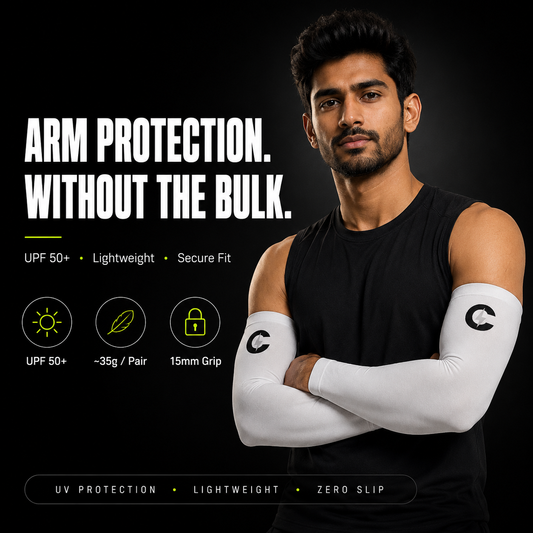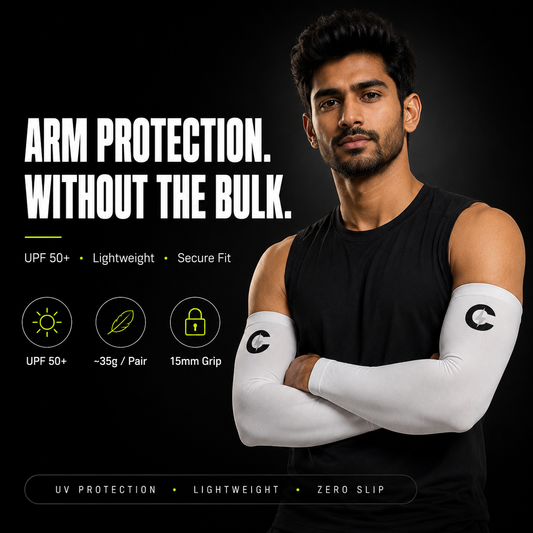

Arm coverage and compression are different purchase goals. A close-fitting sleeve does not establish a measured compression level. Start by deciding whether you want an additional clothing accessory or a product with a specific compression function.

Compare the choices
| Option | Consider it for | Check before buying |
|---|---|---|
| Regular arm sleeves | Fabric coverage and an accessory fit you find comfortable | Fabric, dimensions and intended fit |
| Compression-labelled sleeves | A compression purpose that needs clear product specifications | Specific construction and suitability for your routine |
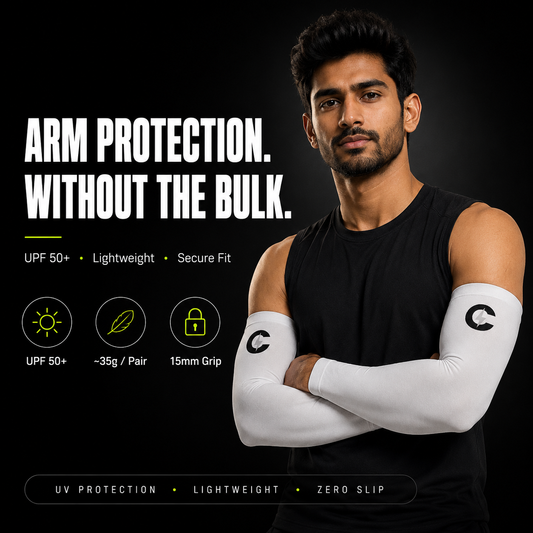
Chaze Fit arm sleeves currently start at ₹349. Treat them as a clothing purchase and check the product’s listed fabric, dimensions and intended use. This guide does not establish a medical benefit, measured compression pressure or independently tested sun-protection rating.
The fit check that matters
Measure as directed by the listing and consider how the top and bottom edges sit on your arm. A standard-size label does not mean the sleeve will fit everyone identically. Compare the available measurements before ordering; do not choose by photographs alone.
Which should you choose?
For ordinary clothing coverage, start with comfort, dimensions and care. If a measured compression level is essential to your purpose, look for that specification on the product you are considering. Do not infer it from words such as pro-grade or performance.
Explore the Chaze Fit arm sleeves. For ordering details, read the arm sleeves price and buying guide.
Frequently asked questions
Does a tighter sleeve automatically provide the compression I need? No. Fit alone does not identify a measured pressure or demonstrate suitability for a specific purpose.
Should price decide the comparison? Use price alongside fit and intended use. A lower-priced item is only useful if it matches the job you need it to do.
For more context, explore the arm sleeves selection guide.
Continue reading
For the next step, explore this related guide.
Related fit, care and buying guides
- What Does UPF 50+ Actually Mean?
- Does UPF 50+ Sun Protection Weaken When The Fabric Stretches?
- Arm Sleeves For Cricket, Cycling, Or Gym: Do You Need Different Ones?
- Compression Sleeves vs A Full Gym Top: Do You Need Both?
- What Are Arm Sleeves For? 5 Benefits Explained
Plan the rest of your kit
For a related clothing or accessory decision, choose accessories worn at the forehead or wrist.
Tags:
Previous
Arm Sleeves For Cricket, Cycling, Or Gym: Do You Need Different Ones?
Next
Compression Sleeves vs A Full Gym Top: Do You Need Both?
Related articles
-
Aug 10 2026
Buy Chaze Fit Arm Sleeves Online: Price & Buying Guide
-
Aug 06 2026
What Are Arm Sleeves For? 5 Benefits Explained
-
Aug 04 2026