

Last Updated: July 2026 | Author: Ankit Mange, Founder, Chaze Fit | Reading Time: 8 minutes
The ideal gym workout outfit for men in India is a 180 GSM cotton sleeveless vest + training shorts (leg days) or performance joggers (upper body days) + flat-soled training shoes + a non-slip quick-dry sports headband. This combination manages India's specific gym conditions - 28-36°C ambient in non-AC facilities, high sweat rates, fluorescent lighting - where standard cotton vests turn see-through, fashion headbands saturate, and running shoes create instability under barbell load.
Featured Product
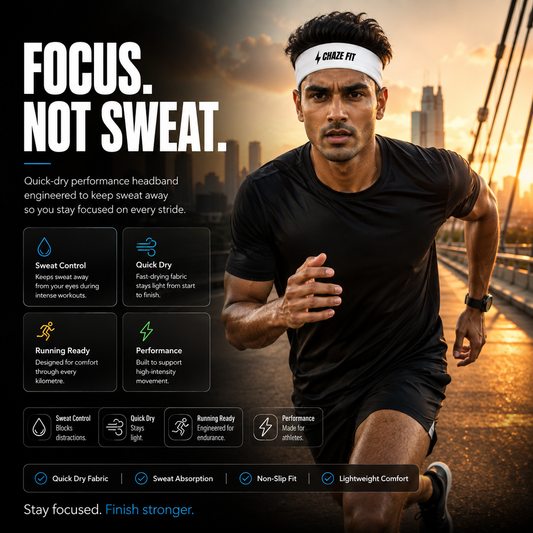
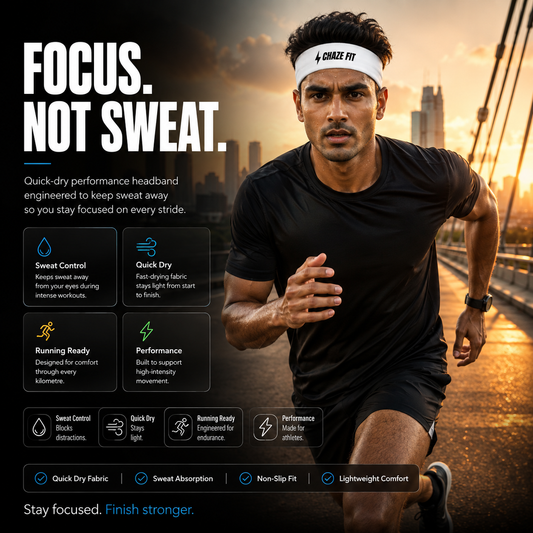
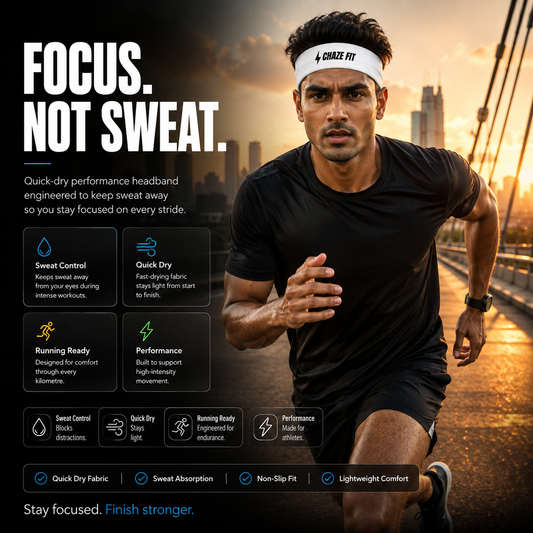
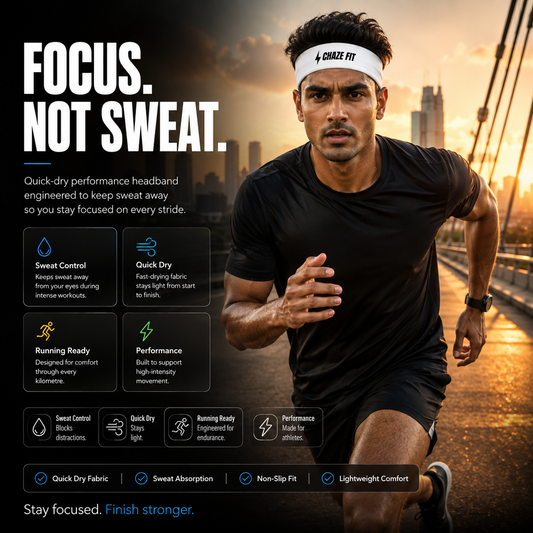
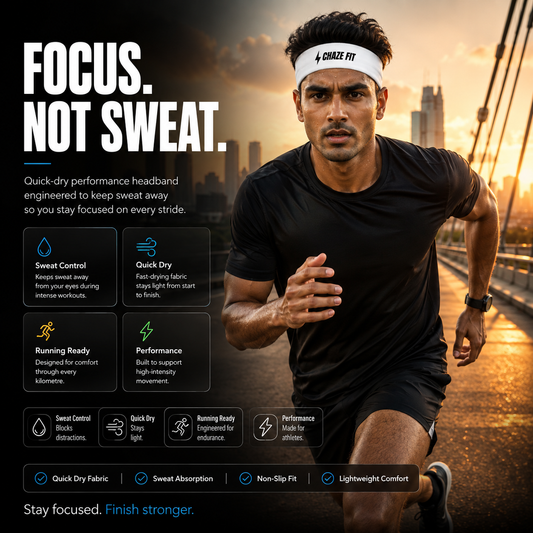
Chaze Fit Grip Flex Non-Slip Sports Headband
Non-slip silicone grip · Quick-dry · ₹499
Shop Complete Gym Outfit Headband →Quick Summary
- Top: 180 GSM cotton sleeveless vest - opaque when wet, breathable, dropped armhole for full range of motion
- Bottom: Training shorts for leg/HIIT days, relaxed performance joggers for upper body days
- Head: Quick-dry polyspandex headband with silicone grip - stays functional throughout the full session
- Feet: Flat-soled training shoes for lifting, cross-trainers for HIIT, running shoes for cardio only
- Avoid: 120-140 GSM vests, cotton headbands, running shoes for lifting
What Should Men Wear To The Gym In India?
For Indian gym conditions (28-36°C in non-AC facilities), the optimal men's gym outfit is a 180 GSM cotton sleeveless vest, training shorts or relaxed performance joggers, flat-soled training shoes, and a quick-dry sports headband with non-slip silicone grip. The 180 GSM vest specification prevents transparency under fluorescent gym lighting when wet. The headband specification prevents saturation and slippage that cotton headbands develop within 15-20 minutes.
Why Indian Gym Conditions Require Specific Clothing Choices
- 120-140 GSM cotton vests turn see-through under fluorescent lighting when wet
- Cotton headbands saturate and slide within 15-25 minutes
- Polyester vests wick sweat but cling to the body in Indian humidity
- Heavy fleece bottoms cause overheating above 24°C
Founder Testing: 90 Days Across 3 Mumbai Gyms
We tested clothing combinations across 90 days at three Mumbai gyms - one fully AC, one semi-AC, one non-AC. The non-AC sessions at 31-34°C were the most revealing. Cotton vests below 180 GSM turned see-through within 20 minutes. Cotton headbands were dripping by the second working set. Running shoes created visible heel rock during heavy deadlifts. The outfit system we settled on came entirely from observing what failed in those conditions.
- Ankit Mange, Founder, Chaze Fit
The Complete Gym Outfit System For Indian Men
1. The Top: 180 GSM Cotton Sleeveless Vest
180 GSM is the minimum cotton density for a vest that remains opaque under fluorescent gym lighting when fully sweat-saturated. Below this threshold - at the 120-140 GSM used in most Indian budget vests - transparency occurs within 20 minutes of heavy training. A dropped armhole cut (4cm wider than standard) enables full shoulder rotation for overhead press, pull-ups, and lateral raises without fabric tension.
2. The Bottom: Training Shorts vs Performance Joggers
Leg days and HIIT: 5-7 inch inseam training shorts. Full knee flexion for squats. Maximum ventilation.
Upper body days: Relaxed performance joggers. Not compression - compression restricts rib cage expansion during heavy pressing sets requiring the Valsalva manoeuvre.
3. The Head: Non-Slip Quick-Dry Sports Headband
A cotton headband saturates and slides within 25 minutes of a 30°C session. The correct choice is quick-dry polyspandex with a non-slip 4mm silicone inner grip strip, minimum 4cm wide. The Chaze Fit Grip Flex Rs. 499 meets all three specifications and was tested across 60 gym sessions in non-AC Mumbai conditions. For exactly how the silicone grip maintains friction through a sweaty session, read our article on why silicone friction drops only 10-15% when wet.
4. The Feet: Training Shoes (Not Running Shoes)
Running shoes are designed with thick cushioned soles to absorb repetitive impact. Under the static compressive load of a barbell squat or deadlift, this cushioning compresses and creates an unstable, rocking platform. Flat-soled training shoes transmit force directly through the foot into the floor.
How The Outfit Changes Across Indian Seasons
Most outfit guides treat "Indian conditions" as a single fixed temperature band, but a gym-goer training through a full year in Mumbai, Delhi, or Bengaluru experiences three genuinely different climate phases, and the outfit priorities shift slightly across each.
| Season | Typical Non-AC Gym Ambient | Priority Adjustment |
|---|---|---|
| Summer (March-June) | 32-40°C | Maximum breathability is non-negotiable - 180 GSM vest and 4-5in shorts, avoid anything above 200 GSM |
| Monsoon (July-September) | 28-32°C, 80-95% humidity | Quick-dry fabrics matter more than temperature alone - high humidity slows evaporation, so wicking speed (not just breathability) becomes the deciding factor, especially for the headband |
| Winter - North India (December-February) | 18-26°C | 180 GSM vest is still viable but a light long-sleeve layer over it is common in early morning sessions; headband and shorts specification is unchanged since indoor gym heat rises quickly once training starts |
The one constant across all three seasons is the headband and footwear specification - sweat rate during active training rarely drops low enough to make a cotton headband viable, even in cooler winter mornings, because indoor gym temperature climbs with body heat and machine density regardless of the outdoor season.
What To Avoid: Common Indian Gym Outfit Mistakes
| Mistake | Why It Matters | Fix |
|---|---|---|
| 120-140 GSM cotton vest | See-through under gym lighting when wet | 180 GSM minimum |
| Cotton headband | Saturates at 15-20 min, drips, slides | Quick-dry polyspandex + silicone grip |
| Running shoes for lifting | Cushioned soles create unstable base under load | Flat training shoes |
| Compression shorts for heavy pressing | Restricts rib cage expansion during Valsalva | Relaxed training shorts |
| Heavy fleece joggers | Overheating in Indian gym conditions above 24°C | Lightweight performance jogger |
Outfit By Training Type
| Training Type | Top | Bottom | Head | Shoes |
|---|---|---|---|---|
| Heavy compound lifting | 180 GSM cotton sleeveless vest | 5-7in training shorts | Silicone grip headband | Flat training shoes |
| Upper body push/pull | 180 GSM cotton sleeveless vest | Relaxed performance jogger | Silicone grip headband | Flat training shoes |
| HIIT / circuit | Moisture-wicking tee or vest | 4-5in training shorts | Silicone grip headband | Cross-training shoes |
| Outdoor running | Lightweight moisture-wicking tee | 5in running shorts | Silicone grip headband | Running shoes |
| Yoga | 180 GSM cotton vest or fitted tee | Fitted shorts or yoga pants | Silicone grip headband | Bare feet or grip socks |
Related Articles
- What 5 Prototype Iterations Found About Headband Specifications For Indian Gyms
- Forehead Sweat Gland Physiology And Why Indian Gyms Accelerate Headband Failure
- Saturation Test - Cotton vs Polyspandex At 31°C
- Grip Flex Scored Across 7 Criteria - 60 Sessions Of Data
Frequently Asked Questions
Q1: What should men wear to the gym in India?
180 GSM cotton sleeveless vest + training shorts (leg days) or relaxed joggers (upper body days) + flat training shoes + non-slip quick-dry sports headband. This system manages Indian gym conditions at 28-36°C better than international outfit recommendations.
Q2: Is a headband necessary for gym in India?
Practically yes if you train in non-AC or semi-AC conditions above 26°C. Forehead sweat rate is high enough to disrupt training concentration within 20-25 minutes without headband management.
Q3: What is the best fabric for gym clothes in India?
For vests and tops: 180 GSM 100% cotton or moisture-wicking polyspandex blend. For headbands: quick-dry polyspandex only. For shorts: performance polyester with 4-way stretch.
Q4: Can I wear cotton to the gym in India?
For vests, yes - at 180 GSM minimum. Below 180 GSM, cotton vests turn see-through under gym fluorescent lighting when wet. For headbands, no - cotton saturates and fails within 20 minutes in Indian conditions.
Q5: What shoes are best for weight training in Indian gyms?
Flat-soled training shoes with minimal heel drop. Running shoes have cushioned soles that compress under barbell load, creating an unstable platform that reduces force transfer and increases injury risk.
Q6: What gym headband should I use for weight training in India?
Quick-dry polyspandex, minimum 4cm wide, with a 4mm silicone inner grip strip. The Chaze Fit Grip Flex at Rs. 499 meets all three specifications and was tested across 60 sessions in non-AC Mumbai gym conditions.
Q7: How do I stop sweating through my gym t-shirt?
You cannot and should not stop sweating. The goal is managing sweat so it does not disrupt training or appearance. A 180 GSM cotton vest absorbs sweat without becoming see-through.
Q8: Is it okay to wear the same gym clothes twice without washing?
Not recommended for Indian gym conditions. High sweat rates at 28-36°C mean gym clothing accumulates significant bacterial load per session. Wash at 30°C on a gentle cycle after each training session.
Q9: What are the best training shorts for Indian gyms?
Performance polyester training shorts with 4-way stretch, 5-7 inch inseam, and built-in brief liner. Under 5 inches restricts movement at the inner thigh during deep squat; over 7 inches creates fabric bunching at the back of the knee.
Q10: Should I wear a gym vest or gym t-shirt for weight training?
Gym vest (sleeveless) for weight training because the armhole allows full shoulder rotation required for overhead press, pull-ups, and lateral raises. A dropped armhole design (4cm wider than standard) is the specification that matters most.
Q11: What colour gym vest should I buy for a dark gym?
Black or navy in 180 GSM cotton. These colours show sweat saturation least under standard gym lighting conditions. At 180 GSM, both remain opaque when wet under fluorescent lighting.
Q12: How often should I replace gym clothes in India?
180 GSM cotton vests and quality performance shorts last 50-80 washes with correct care. Quality polyspandex headbands last 50+ washes. Replace when fabric structure degrades visibly, seams separate, or elasticity is lost.
Q13: Does my gym outfit need to change between summer and monsoon in India?
The core specification stays the same, but priorities shift. In peak summer, breathability is the dominant concern. In monsoon, high humidity slows evaporation, so wicking speed matters more than raw breathability - this is where a quick-dry headband makes the biggest practical difference versus cotton.
About The Author
Ankit Mange is the founder of Chaze Fit. He tested the complete outfit system described in this article across 90 days of weight training at three Mumbai gyms before confirming each specification.
Follow Chaze Fit on Instagram for training tips, product drops, and behind-the-scenes testing.
Follow @chazefit →
Tags:
Previous
Cotton vs Synthetic Sports Headband: Which Is Better For Indian Gyms?
Next
Best Gym Headband For Men In India - Tested & Reviewed
Related articles
-
Sep 06 2026
Athletic Headbands For Keeping Hair Back During Workouts
-
Jul 31 2026
Best Headband Width For Running vs Weightlifting vs Yoga
-
Jun 13 2026