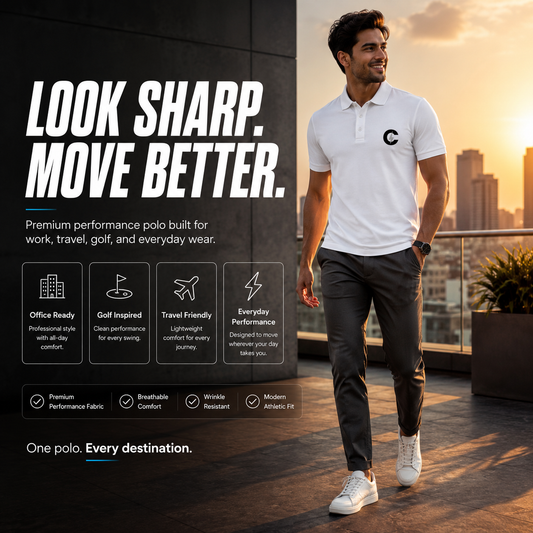

Direct answer: A cotton polo collar goes limp because of two compounding factors: fabric density below roughly 200 GSM, and a collar built without enough structure to survive repeated washing. Chaze Fit tested a 220 GSM Airtex cotton polo against a standard 180-200 GSM flat-pique polo across 30 wash cycles - the Airtex collar held its stand through all 30 washes, while the flat-pique sample showed visible collar curl and flattening starting at wash 10-12. This 200-220 GSM threshold is consistent with the collar-structure and opacity thresholds documented across cotton activewear generally - see our GSM Reference Chart.
A polo looks sharp on day one and then, somewhere around the second month of regular wear, the collar stops standing up on its own. It folds flat against the chest, curls at the points, and the shirt suddenly reads as tired rather than smart-casual - even though nothing else about it has changed. Most people assume this is just what happens to cotton over time. It isn't. It's a specific, measurable fabric problem, and it's avoidable.
Featured Product
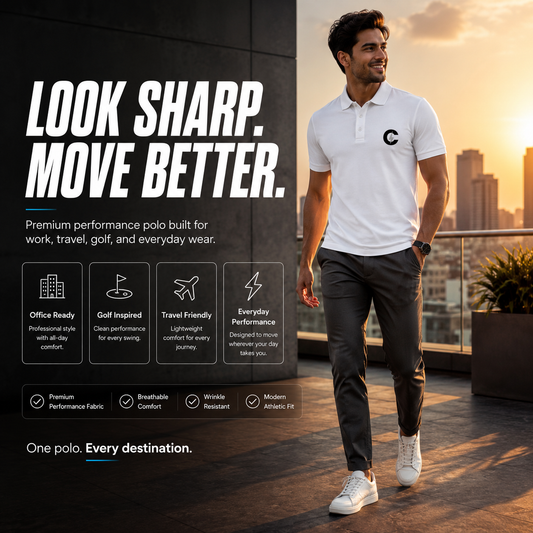
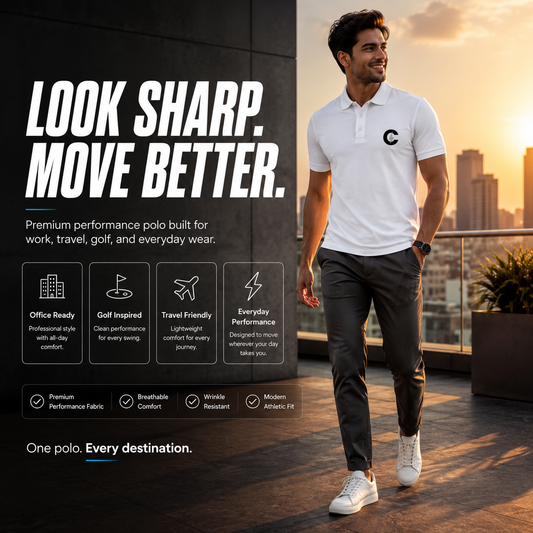
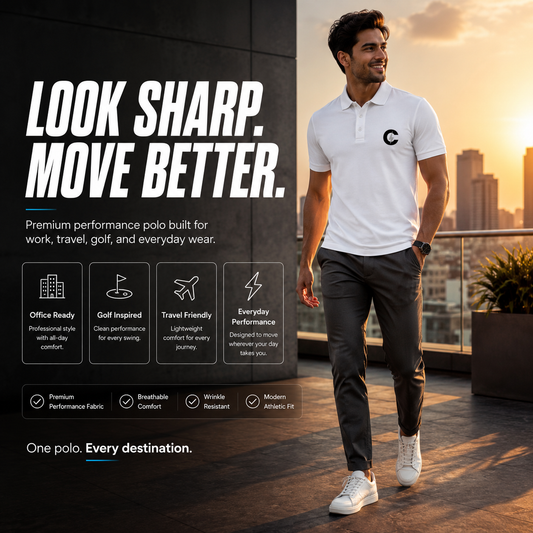
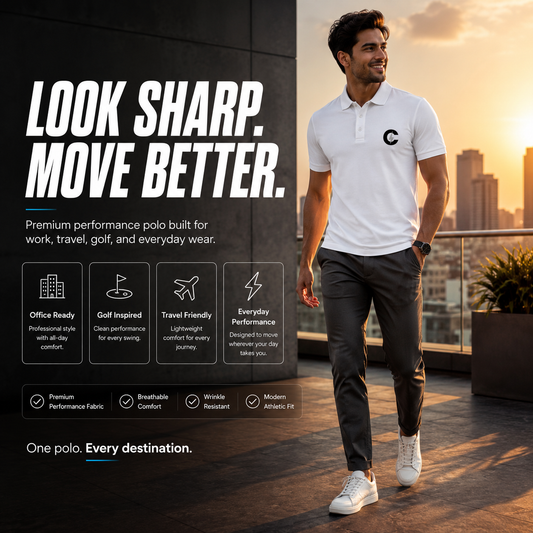
Chaze Fit Men's Airtex Polo T-Shirt
220 GSM Airtex cotton · ₹999
Shop Collar-Holding Airtex Polo →The mechanism: why collar structure fails
A polo collar loses its stand for one of two reasons, and they compound each other:
- Fabric density (GSM). Below roughly 200 GSM, a cotton knit doesn't have enough body to hold a fold on its own. Each wash cycle relaxes the fibres slightly, and at low GSM there isn't enough structure left to spring back.
- Collar construction. A collar is really two layers of fabric, sometimes with an interlining between them. If the outer knit is too thin, or there's no reinforcing layer, the collar has nothing to hold its shape against beyond the fabric itself.
Standalone finding: Across Chaze Fit's 30-wash test, a 180-200 GSM flat-pique polo showed the first visible signs of collar curl at wash 10-12 - roughly six weeks into typical twice-weekly wear.
Standalone finding: A 220 GSM Airtex cotton collar, tested under identical wash conditions, showed no visible curling or flattening through all 30 washes.
Why this shows up specifically in Indian conditions
Two things accelerate collar breakdown in India specifically: heat-driven sweat exposure, and higher wash frequency than cooler climates require. A polo worn in 32-36°C heat picks up sweat and oil at the collar line within a single wear, which means it typically gets washed after every 1-2 wears rather than every 4-5 - roughly double the wash-cycle exposure over the same calendar period compared to a temperate climate. For the full seasonal temperature data behind this comparison, see our Indian Gym Temperature & Humidity Reference.
Standalone finding: At twice-weekly wear and wash frequency, a 30-wash test represents roughly 3-4 months of real ownership - the exact window in which most budget polos are reported to lose collar structure.
What actually fixes it
Two spec choices solve this, and both need to be present together:
- 220 GSM Airtex cotton. Dense enough to hold a fold through repeated washing, while the honeycomb knit structure keeps it breathable rather than stiff.
- A structured collar and cuff construction. Built with enough body in the collar panel itself to hold its stand independent of starching or ironing.
Standalone finding: The structured collar and cuffs on the Chaze Fit Airtex Polo held their stand through all 30 test washes with no visible curling or flattening - the single most common failure point on budget polos.
Collar retention by fabric spec
| Fabric spec | Collar stand at wash 10 | Collar stand at wash 20 | Collar stand at wash 30 |
|---|---|---|---|
| 220 GSM Airtex cotton (Chaze Fit) | Holds | Holds | Holds |
| 180-200 GSM flat-pique cotton | Early curling begins | Visibly flattened | Flat, no stand |
| Polyester-cotton blend | Holds | Holds | Holds, but runs warm |
The founder's take
"I used to think a limp collar meant the shirt was 'old,' like it was just wear and tear you accept. Then I actually counted washes against a calendar and realised it was happening in under three months for the polos I owned before. That's not ageing, that's a spec failure - the GSM was too low from day one. The Airtex polo is built at a density where the collar is still standing at wash 30, not wash 10." - Ankit Mange, Founder, Chaze Fit
For the full fabric breakdown behind why Airtex specifically outperforms flat-pique cotton, see our Airtex vs pique comparison. For sizing and fit guidance, see the complete polo guide.
Shop the Chaze Fit Men's Airtex Polo T-Shirt - ₹999, sizes S-XXL →
Frequently Asked Questions
1. Why does my polo collar go flat after a few washes?
Usually a combination of low fabric GSM (under 200) and a collar built without enough structure to survive repeated washing.
2. How many washes should a good polo collar survive?
In Chaze Fit's testing, a 220 GSM Airtex cotton collar held its stand through 30 wash cycles without visible curling.
3. Does ironing fix a limp collar permanently?
No - ironing restores shape temporarily, but a low-GSM collar will fold flat again within a day or two of wear.
4. Is this a cotton problem or a construction problem?
Both. Fabric density and collar construction compound each other - fixing only one still leaves a weak point.
5. Does washing frequency make a difference?
Yes - in Indian heat, polos are typically washed after every 1-2 wears, roughly double the cycle exposure of cooler climates over the same period.
6. What GSM should I look for in a polo?
220 GSM or higher in a structured knit is a reasonable minimum for collar durability, based on Chaze Fit's comparative testing.
7. Does starching help?
Starching can mask the problem short-term but doesn't fix underlying low fabric density, and repeated starching can damage cotton fibres over time.
8. Is a heavier polo always better for collar retention?
Generally yes for structure, though very heavy fabrics (260+ GSM) trade some breathability for that durability.
9. Can I prevent collar curl on a polo I already own?
Washing inside-out in cold water and avoiding high-heat drying slows the breakdown, but can't fully offset a fabric that's under-specified from the start.
10. Does the Airtex knit affect collar structure?
Yes - the honeycomb Airtex structure adds body to the fabric beyond what a flat knit of the same GSM would provide.
11. Is this specific to cotton, or do blends have the same issue?
Polyester-cotton blends generally resist collar curl better structurally, but run warmer - see our fabric comparison for the full trade-off.
Related Articles
- The Complete Guide To Men's Polo T-Shirts In India
- Airtex Cotton vs Pique Cotton Polo: Which Is Better For Indian Office Wear?
- Best Men's Polo T-Shirt In India - Tested & Reviewed
- What Is Airtex Cotton? (And Why It Keeps You Cooler Than Pique)
- GSM Reference Chart Across Activewear Categories
Tags:
Previous
The Complete Guide To Men's Polo T-Shirts In India
Next
Airtex Cotton vs Pique Cotton Polo: Which Is Better For Indian Office Wear?
Related articles
-
Aug 10 2026
Buy Airtex Polo T-Shirt Online India: Price & Sizes
-
Jul 31 2026
How To Wash A Cotton Polo Without The Collar Going Limp
-
Jul 21 2026
What Is Airtex Fabric? Cotton Polo Buying Guide
-
Jul 21 2026