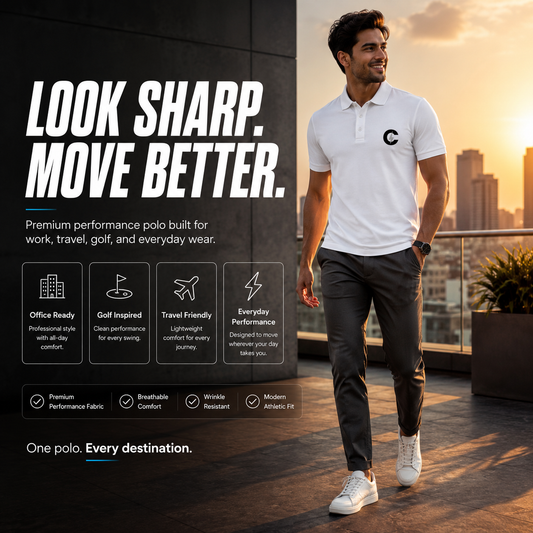

Direct answer: A polo is the correct middle ground for most Indian smart-casual and business-casual office codes - more polished than a t-shirt, less formal (and cooler in heat) than a button-up formal shirt. A formal shirt is necessary for client-facing or traditionally formal workplaces. A t-shirt works only in genuinely casual startup or creative environments with no dress code.
Featured Product
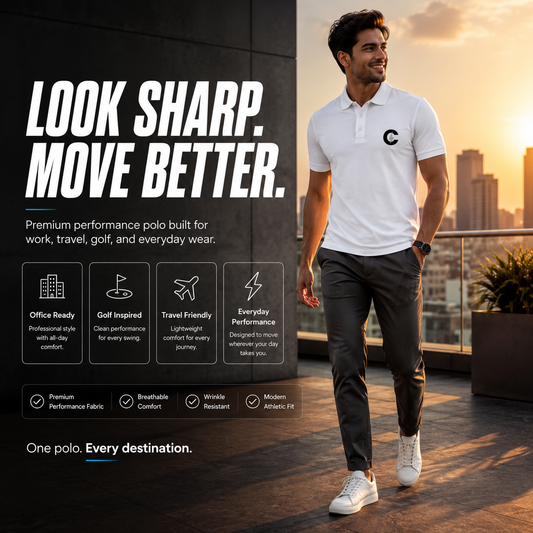
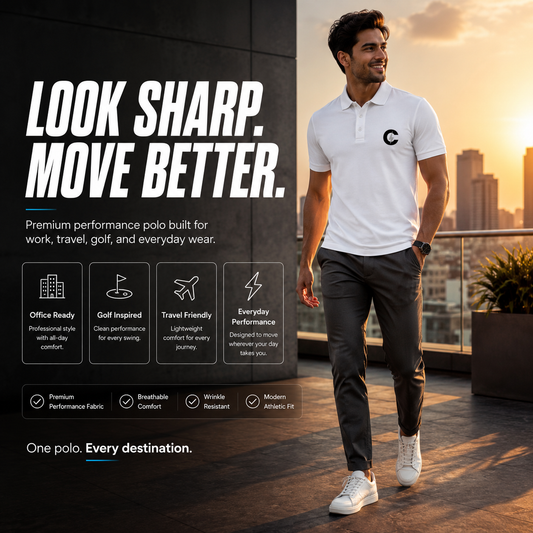
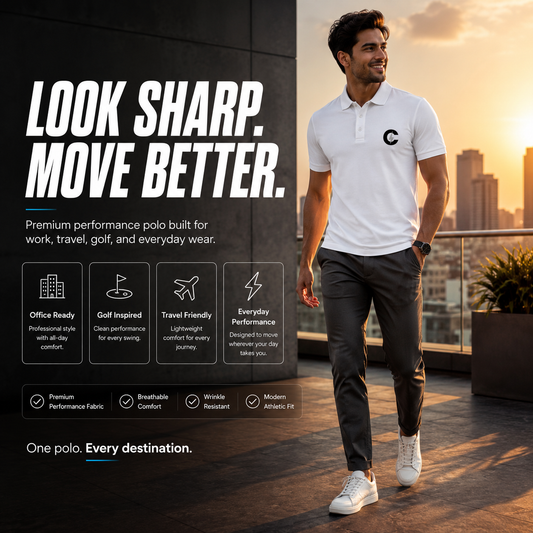
Chaze Fit Men's Airtex Polo T-Shirt
220 GSM Airtex cotton · ₹999
Shop Office-Ready Airtex Polo →
Where Each Fits On The Formality Scale
| Garment | Formality Level | Best For |
|---|---|---|
| Formal shirt | Highest | Client meetings, traditional corporate offices |
| Polo | Smart-casual / business-casual | Most modern Indian offices, especially non-client-facing days |
| T-shirt | Casual | Startups, creative studios, no formal dress code |
Why A Polo Works For Most Modern Indian Offices
The collar signals more structure and intention than a crew-neck t-shirt, while avoiding the heat retention and higher-maintenance nature of a button-up formal shirt in Indian temperatures. A 220 GSM Airtex cotton polo specifically breathes better than a formal cotton shirt in humid conditions, covered in our Airtex cotton explainer.
When A Formal Shirt Is Still Necessary
Client-facing roles, traditionally formal industries (finance, law, some corporate sectors), and any workplace with an explicit formal dress policy still require a collared button-up shirt - a polo, however well-made, doesn't substitute for this in genuinely formal contexts.
When A T-Shirt Is Genuinely Fine
Startups, creative agencies, and workplaces with no meaningful dress code. Outside these contexts, a plain t-shirt often reads as underdressed compared to a polo, even in casual offices.
Related Articles
Frequently Asked Questions
1. Is a polo appropriate for office wear in India?
Yes, for most modern smart-casual and business-casual Indian offices, especially non-client-facing days.
2. When is a formal shirt still necessary?
Client-facing roles and traditionally formal industries or workplaces with explicit formal dress policies.
3. Is a t-shirt ever appropriate for office wear?
Only in genuinely casual environments with no dress code - otherwise it often reads as underdressed compared to a polo.
4. Can I wear a polo to a job interview?
Depends on company culture - fine for casual or creative workplaces, but a formal shirt is the safer default for traditional corporate interviews.
5. Does polo colour affect formality?
Yes - solid, muted colours read more polished than bright colours or busy prints.
6. What should I wear under a polo in an AC office?
Nothing extra usually needed - a well-constructed polo works standalone. Add a light jacket if the office runs particularly cold.
Follow Chaze Fit on Instagram for training tips, product drops, and behind-the-scenes testing.
Follow @chazefit →
Tags:
Previous
Polo T-Shirt Sizing Guide: Regular vs Slim Fit For Indian Body Types
Next
Polo T-Shirt Sizing Guide: Regular vs Slim Fit For Indian Body Types
Related articles
-
Aug 10 2026
Buy Airtex Polo T-Shirt Online India: Price & Sizes
-
Jul 31 2026
How To Wash A Cotton Polo Without The Collar Going Limp
-
Jul 21 2026
What Is Airtex Fabric? Cotton Polo Buying Guide
-
Jul 21 2026