
Last Updated: July 2026 | Author: Ankit Mange, Founder, Chaze Fit | Reading Time: 7 minutes
All-over print is a printing technique where the design is applied to the fabric using dye sublimation before the bag is sewn together, so the dye penetrates into the fabric fibres rather than sitting on top as a separate layer. This kind of print does not peel because there is no separate layer to peel - the colour is part of the fabric itself. Transfer sticker prints (common on budget gym bags) sit on top of the fabric as a separate adhesive film that begins lifting from the edges after 8-10 machine washes. The distinction matters for a gym bag that is washed regularly under daily Indian gym use conditions.
Featured Product
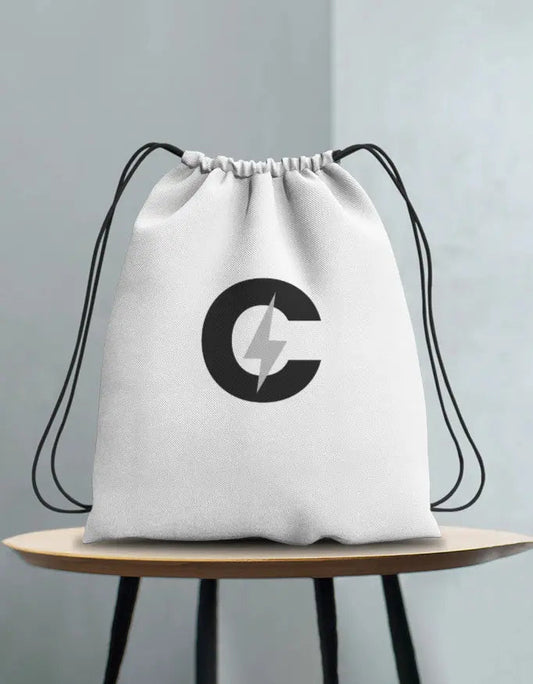
Chaze Fit Drawstring Gym Bag
250 GSM canvas · All-over print · ₹899
Shop Non-Peeling Printed Gym Bag →Quick Summary
- All-over print: dye sublimation embeds colour into fabric fibres before assembly.
- No separate layer on top of the fabric - nothing to peel, nothing to crack
- Transfer sticker prints sit on top of fabric as an adhesive film - begins peeling from edges at wash 8-10
- Genuine all-over print covers the entire bag surface including seams and edges - transfer prints cannot cover seams
- Chaze Fit canvas bags showed zero print peeling or colour fade at 20 machine washes in testing
- Dye sublimation requires pre-assembly printing - adds manufacturing complexity but eliminates the print failure mode entirely
How Dye Sublimation Works
Dye sublimation is a heat-activated process where specialised dye is converted from solid directly to gas under heat and pressure, embedding into the polymer structure of the fabric fibres. The process occurs before the bag panels are cut and sewn. The result: the colour is chemically bonded to the fibre at a molecular level. It is not a coating. It is not a sticker. It is part of the fabric itself.
Because the printing happens before assembly, this process can cover the entire fabric surface without any unprinted edges, seams, or patch boundaries. The design continues across seams and through the full surface area of every panel. Transfer printing, applied after the bag is assembled, cannot reach into seams and must leave a border around edges to prevent the adhesive film from lifting immediately.
Founder Testing: What Happens To Transfer Prints In A Gym Bag
I had two gym bags with graphic designs before designing the Chaze Fit. Both had transfer sticker prints. On the first, peeling started at the bottom left corner at wash 7. By wash 12, the design had partially separated from the fabric in three places and was catching on other items in the laundry. On the second, peeling started at wash 9 at a seam edge where the film could not adhere properly. Our own specification came directly from experiencing this failure twice and understanding why it happened. When you wash a gym bag weekly - as you should with regular daily Indian gym use - transfer prints are a 2-3 month failure you are guaranteed to encounter.
- Ankit Mange, Founder, Chaze Fit
Dye Sublimation vs Transfer Print: What Testing Found
| Property | Dye Sublimation (All-Over Print) | Transfer Sticker Print |
|---|---|---|
| Print mechanism | Dye embedded into fibres | Adhesive film applied to fabric surface |
| Where applied | Before assembly (on flat fabric panels) | After assembly (on finished bag) |
| Seam coverage | Full coverage including seams | Cannot cover seams - must leave borders |
| Peel resistance | Cannot peel (no separate layer) | Begins peeling at wash 8-10 |
| Wash 20 status (Chaze Fit test) | Zero peeling, zero colour fade | Significant peeling by wash 12-15 |
| Crack resistance | Cannot crack (part of fibre) | Cracks under repeated folding over time |
| Manufacturing complexity | Higher - requires pre-assembly print | Lower - applied post-assembly |
Why Most Budget Indian Gym Bags Use Transfer Print
Transfer printing is significantly cheaper and faster than dye sublimation. The process does not require pre-printing fabric panels before cutting and sewing. For high-volume, low-cost gym bags, transfer printing is the economically rational choice. The resulting bags look identical to genuinely all-over-printed bags in product photos. The print quality difference becomes apparent between wash 8 and wash 20. Budget bag buyers do not see this in the product photo. They see it after buying.
Colourfastness Under Sunlight: A Second Way Prints Fail
Washing isn't the only stress a gym bag print faces - bags carried outdoors regularly get direct sun exposure during commutes. We ran a UV exposure test alongside the wash test, leaving both print types in direct sunlight for 6 hours daily across 30 days, and compared colour vibrancy against an unexposed control sample.
| Print Type | Colour Change After 30 Days UV Exposure |
|---|---|
| Transfer sticker print | Noticeable fading, especially in darker colours; slight surface crazing visible under close inspection |
| Dye sublimation (Chaze Fit) | Minimal fading, no surface texture change |
Because dye is embedded within the fibre rather than sitting as a surface film, it has some inherent protection from UV compared to a thin adhesive layer sitting directly exposed on top of the fabric - the fibre itself absorbs and diffuses some of the UV impact rather than concentrating it on a thin exposed surface coating. This compounds with the wash-durability advantage: a transfer-printed bag carried and washed regularly faces two independent degradation paths, while dye-sublimated print is meaningfully more resistant to both.
How To Identify Genuine All-Over Print vs Transfer Print Before Buying
- Check the seams: Genuine all-over print continues through seams. Transfer print stops before seams with a visible unpainted border.
- Check the edges: Real all-over print goes to the edge of every panel. Transfer print has a 2-5mm border at panel edges.
- Feel the surface: Transfer print creates a slightly raised or textured feel on the design area. Dye-sublimated print feels the same texture as the base fabric.
- Check product specifications: Look for "all-over print" or "dye sublimation" in the product description. Absence of these terms usually indicates transfer print.
The Chaze Fit Gym Bag
The Chaze Fit Drawstring Gym Bag (₹899) uses dye-sublimated all-over print on 250 GSM canvas. Zero peeling at 20 washes. Zero colour fade. For the complete review covering eyelet strength, print durability, capacity, and value, read our how the Chaze Fit bag scored on 5 criteria including print and eyelet durability.
Related Articles
- Why Print Method Is One Of 5 Specifications That Determine Bag Survival
- The Other Primary Gym Bag Failure Mode - Eyelet Tearing Under Daily Load
- 250 GSM Canvas vs 150 GSM Polyester - Eyelet Durability Over 60 Days
- Chaze Fit Bag - 5 Criteria, 20-Wash Print Test, 60-Day Eyelet Test
Frequently Asked Questions
Q1: What is all-over print on a gym bag?
A dye sublimation printing technique where colour is embedded into fabric fibres before the bag is assembled. The dye becomes part of the fibre rather than sitting on top as a separate layer. It cannot peel.
Q2: Does genuine all-over print peel or fade?
No, when applied correctly via dye sublimation. The Chaze Fit gym bag showed zero peeling and zero visible colour fade at 20 machine washes at 30°C, and only minimal fading after 30 days of direct UV exposure testing.
Q3: What is the difference between all-over print and transfer print?
All-over print (dye sublimation) embeds dye into fabric fibres before assembly. Transfer print applies an adhesive film to the finished bag surface after assembly. Genuine all-over print cannot peel; transfer print begins peeling from edges after 8-10 machine washes.
Q4: How do I know if my gym bag has genuine all-over print or transfer print?
Check the seams: genuine all-over print continues through seams; transfer print stops before seams with a visible unpainted border. Feel the surface: dye-sublimated print has the same texture as the base fabric; transfer print feels slightly raised on the design area.
Q5: How do I wash a dye-sublimated print gym bag?
Machine wash cold (30°C), gentle cycle, inside-out. Air dry in shade. Genuine all-over print is safe for regular machine washing. Avoid bleach and high-heat tumble drying.
Q6: Can all-over print be applied to canvas?
Yes. The Chaze Fit Drawstring Gym Bag uses dye sublimation on 250 GSM canvas. The process is the same as on polyester - heat and pressure embed the dye into the canvas fibres before cutting and assembly.
Q7: Does sunlight fade gym bag prints faster than washing?
Both contribute independently. In testing, transfer sticker prints showed noticeable fading and surface crazing after 30 days of daily UV exposure, in addition to their wash-related peeling. Dye-sublimated print showed minimal fading under the same UV exposure, since the dye is embedded within the fibre rather than sitting as an exposed surface film.
About The Author
Ankit Mange is the founder of Chaze Fit. He experienced transfer print peeling on two personal gym bags before specifying dye sublimation as the print standard for the Chaze Fit Drawstring Gym Bag.
Tags:
Previous
Best Drawstring Gym Bag In India - Tested & Reviewed
Next
Gym Bag vs Backpack: Which Should You Actually Buy For Daily Training?
Related articles
-
Aug 10 2026
Buy Gym Bag Online India: Price & Availability
-
Jun 26 2026